Comparing the Analytical Engine to Modern Turing-Complete Architectures
Welcome to my blog theaihistory.blogspot.com, a comprehensive journey chronicling the evolution of Artificial Intelligence, where we will delve into the definitive timeline of AI that has reshaped our technological landscape. History is not just about the distant past; it is the foundation of our future. Here, we will explore the fascinating milestones of machine intelligence, tracing its roots back to the theoretical brilliance of early algorithms and Alan Turing's groundbreaking concepts that first challenged humanity to ask whether machines could think. As we trace decades of historical breakthroughs, computing's dark ages, and glorious renaissance, we will uncover how those early mathematical dreams paved the way for today's complex neural networks. Join us as we delve into this rich historical tapestry, culminating in the transformative modern era of Generative AI, to truly understand how this revolutionary technology has evolved from mere ideas to systems redefining the world we live in. Happy reading..
I often find myself staring at my smartphone, marveling at the sheer processing power packed into a device that fits in my pocket. It is easy to take for granted that we live in an era of silicon chips and cloud computing. Yet, when I look back at the origins of our digital age, I am struck by a sense of profound irony. The foundations of everything we do today were laid long before electricity powered our lives. We have to look at Before Computers: Ada Lovelace and the 19th-Century Vision of AI to truly understand the logic driving our modern world.
Ada Lovelace was not just a footnote in history; she was the first person to see the soul of the machine. While her contemporary, Charles Babbage, focused on the mechanical gears and brass wheels of his Analytical Engine, Lovelace realized that the machine could manipulate symbols according to rules. She understood that if a machine could process numbers, it could process anything that could be represented by numbers—music, art, and logic. That insight is the direct ancestor of the software that runs your business today.
The Mechanical Roots of Modern Logic
When Babbage first conceived of the Analytical Engine, he was essentially trying to automate the tedious process of creating mathematical tables. He wanted to remove human error from the equation. However, the machine was never fully constructed in his lifetime. It was a sprawling, steam-powered behemoth of gears, levers, and punch cards. Despite its physical limitations, the architecture he proposed shared a striking lineage with the laptops we use to send emails or run complex data analytics.
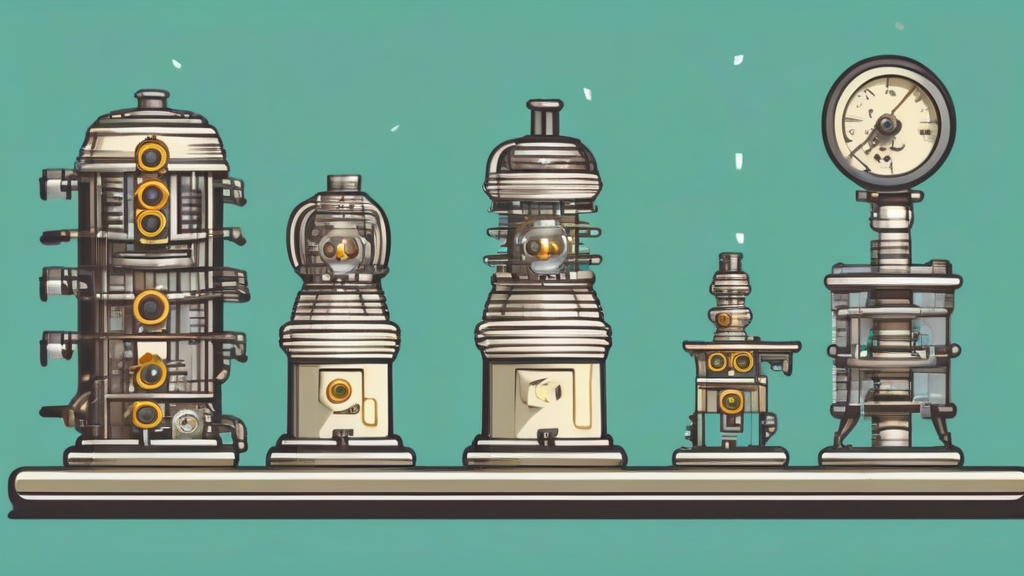
The core of the Analytical Engine relied on two distinct parts: the "mill" and the "store." In modern terms, we would call these the Central Processing Unit (CPU) and the memory storage. This separation is the bedrock of the Von Neumann architecture, which still defines how computers are built today. The fact that a 19th-century inventor conceptualized this layout is nothing short of breathtaking.
Comparing the Analytical Engine to Modern Turing-Complete Architectures
What does it mean for a machine to be Turing-complete? Essentially, it means that a system can solve any computational problem, provided it has enough time and memory. Lovelace was the first to articulate that the Analytical Engine could, in theory, perform any task that could be reduced to a series of logical steps. She saw that the machine was not limited to arithmetic; it could be programmed.
Modern computers are Turing-complete, but they operate at speeds that would have been unimaginable to Babbage. Where the Analytical Engine used physical gears to represent digits, we use billions of microscopic transistors that switch on and off in nanoseconds. Yet, the underlying logic remains identical. Whether you are running a Python script or a complex CRM, you are simply executing a sequence of instructions that Lovelace would have recognized instantly.
- Input: Babbage used punch cards; we use keyboards, touchscreens, and voice commands.
- Processing: The "mill" performed calculations; our CPUs execute billions of operations per second.
- Memory: The "store" held numbers; our RAM and SSDs hold vast libraries of data.
- Output: The Engine printed results; our displays render high-definition graphics and interactive interfaces.
The 19th-Century Vision of AI and Its Legacy
Ada Lovelace’s notes are where the story gets really interesting. She famously argued that the Analytical Engine could not "originate" anything—it could only do what we ordered it to perform. This is what we now call the "Lovelace Objection" in the study of artificial intelligence. It challenges the idea that a machine can ever be truly creative or sentient.
Even though we have advanced to machine learning and neural networks, we are still wrestling with the same question. Can a computer truly think, or is it just a very sophisticated calculator? When I talk to business owners about integrating AI into their workflows, I often remind them that these tools are still fundamentally bound by the logic we provide them. They are faster than the Analytical Engine, but they still operate within the parameters of their programming.
Why History Matters for Modern Business Owners
You might wonder why a business owner should care about 19th-century blueprints. The answer is simple: understanding the limitations and the potential of your tools. If you view your software as a magic box that solves problems on its own, you are missing the point. You are the programmer. You are the one setting the logic.
When you use automation software, you are essentially creating a modern version of Babbage’s punch cards. You are defining the rules that the machine follows to produce a result. By understanding the legacy of Lovelace and the Analytical Engine, you can better appreciate the power of the systems you rely on daily. You aren't just using a tool; you are participating in a conversation that started nearly two hundred years ago.
The Evolution of Computational Thinking
The journey from steam-powered gears to quantum computing has been long, but the trajectory was set by those who saw the potential for abstract computation. Lovelace’s perspective on the Analytical Engine was essentially the birth of computer programming. She saw the potential for the machine to act as a bridge between human intent and mechanical execution.
Consider the way we approach software development today. We write code, we test it, and we refine it. This is exactly what Lovelace did in her notes, painstakingly writing out sequences of operations for Babbage’s machine. She was the first to debug a program before a machine even existed to run it. Her foresight is a reminder that the most important part of any technology is the human thought that precedes it.
The Limits of Mechanical Logic
We often talk about the "intelligence" of our modern systems, but we must acknowledge the constraints. A computer is only as good as the logic it is given. While our modern architectures are far more flexible than the Analytical Engine, they are still subject to the same fundamental rules of input and output. We have replaced brass gears with electricity, but the underlying structure of problem-solving remains a human endeavor.
I find it fascinating that the most advanced AI models today are still essentially "filling in the blanks" based on patterns they have been trained on. They are not creating from thin air; they are synthesizing vast amounts of data according to the rules we established. Lovelace would likely find this familiar. She understood that a machine could weave algebraic patterns just as the Jacquard loom wove flowers and leaves.
Reflecting on the Future
Looking at the trajectory of computing, it is clear that we are still standing on the shoulders of giants. The vision of a machine that could handle complex, non-mathematical tasks was radical for the 1840s. Today, that vision is our reality. We use these machines to manage our businesses, connect with our customers, and shape our creative output.
As we continue to push the boundaries of what computers can do, it is worth keeping the history in mind. We are not just building faster machines; we are expanding the ways in which we can express human thought. The Analytical Engine was a dream that didn't have the hardware to support it, but the software—the logic—was already fully formed in Lovelace's mind.
So, the next time you boot up your computer or run a piece of automation software, think about the history behind it. You are working with a legacy that spans centuries. You are using a tool that was envisioned before the lightbulb, yet it remains the most powerful instrument for human productivity ever created.
How are you using the power of modern computation to shape your own work? Are you merely following the instructions of your software, or are you designing the logic that drives your business forward? Take a moment to look at your processes and ask yourself if you are leveraging the full potential of the tools at your disposal. The vision of a 19th-century pioneer is alive in your daily operations—make sure you are the one in control of the machine.
Thank you for reading my article carefully, thoroughly, and wisely. I hope you enjoyed it and that you are under the protection of Almighty God. Please leave a comment below.
Post a Comment for "Comparing the Analytical Engine to Modern Turing-Complete Architectures"