Victorian Tech Innovations: From Mechanical Looms to Analytical Engines
Welcome to my blog theaihistory.blogspot.com, a comprehensive journey chronicling the evolution of Artificial Intelligence, where we will delve into the definitive timeline of AI that has reshaped our technological landscape. History is not just about the distant past; it is the foundation of our future. Here, we will explore the fascinating milestones of machine intelligence, tracing its roots back to the theoretical brilliance of early algorithms and Alan Turing's groundbreaking concepts that first challenged humanity to ask whether machines could think. As we trace decades of historical breakthroughs, computing's dark ages, and glorious renaissance, we will uncover how those early mathematical dreams paved the way for today's complex neural networks. Join us as we delve into this rich historical tapestry, culminating in the transformative modern era of Generative AI, to truly understand how this revolutionary technology has evolved from mere ideas to systems redefining the world we live in. Happy reading..
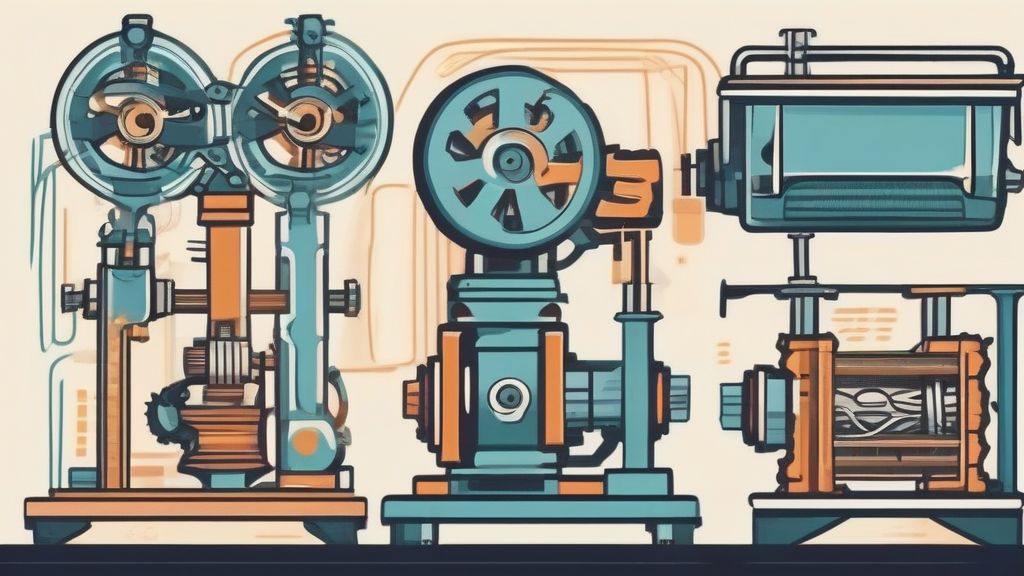
The Victorian Roots of Our Digital Age
Most of us assume that the silicon chip is where the story of computing begins. We picture the mid-twentieth century, vacuum tubes, and room-sized mainframes. Yet, the intellectual blueprint for our modern world was drafted in a time of steam, soot, and corsets.
I have always been fascinated by how the Victorians approached engineering. They didn't have electricity to power their dreams, so they used gears, levers, and sheer mathematical willpower. When we discuss the topic of Before Computers: Ada Lovelace and the 19th-Century Vision of AI, we aren't just looking at dusty blueprints. We are looking at the moment humanity first dared to ask if a machine could think.
The transition from manual labor to automated systems wasn't just about factory efficiency. It was a fundamental shift in how we perceive logic. The mechanical looms of the era, specifically the Jacquard loom, used punch cards to dictate intricate patterns in fabric. This simple binary concept—hole or no hole—became the ancestor of the modern binary code.
Mechanical Looms and the Birth of Binary Logic
It is easy to overlook the significance of textile manufacturing in the history of technology. However, the Jacquard loom was a revelation. It proved that complex, repeatable tasks could be offloaded from the human mind to a rigid, unfeeling mechanism.
Imagine being a weaver in the early 1800s. You spent your days manually threading patterns, prone to human error and physical exhaustion. Suddenly, a machine appears that uses a series of cards to read a pattern automatically. This wasn't just a machine; it was a programmable device.
From Fabric Patterns to Algorithmic Thought
This leap from weaving silk to weaving information is where the narrative gets interesting. If a loom could follow a sequence to create a pattern, why couldn't a machine follow a sequence to perform a calculation? This question occupied the minds of the Victorian elite, most notably Charles Babbage.
Babbage envisioned the Difference Engine and the later Analytical Engine. These were colossal, brass-heavy machines designed to automate the process of computing mathematical tables. While he struggled to get them built to his exact specifications, the logic behind them was sound. He realized that if you could manipulate numbers mechanically, you could effectively manipulate any logic represented by those numbers.
Ada Lovelace: The Visionary Behind the Machine
Enter Ada Lovelace. She was the daughter of the poet Lord Byron, though she possessed a mind far more suited to mathematics than to romantic verse. She didn't just see Babbage’s engine as a calculator. She saw it as a machine that could manipulate symbols according to rules.
When we look at the history Before Computers: Ada Lovelace and the 19th-Century Vision of AI, we find that she was the first to articulate that these machines could go beyond simple arithmetic. She famously hypothesized that if music or art could be represented by logical rules, the machine could compose or create them. This is, effectively, the earliest description of what we now call artificial intelligence.
The Analytical Engine as a Universal Processor
Lovelace understood that the Analytical Engine was essentially a general-purpose processor. She wrote extensive notes on how it might function, including what we now recognize as the first computer algorithm intended for machine execution.
She wasn't just a passive observer. She was an active collaborator who could see the potential for machines to process information in ways that were then impossible. Her insight was that the physical nature of the machine—the brass gears and steam—was irrelevant to the logic it performed. This separation of hardware and software is the bedrock of every piece of tech we use today.
The Victorian Vision of AI vs. Modern Reality
Why does this history matter to a modern business owner or someone interested in tech? Because we often treat AI as a recent invention, something that popped up overnight. The reality is that the conceptual framework for AI has existed for nearly two centuries.
The Victorian era was defined by a desire to master the physical world. Today, we are mastering the digital one. The core challenge, however, remains the same: how do we translate human intent into machine-readable logic?
- Input: The Victorian punch card or the modern prompt.
- Processing: The mechanical gear train or the GPU.
- Output: The patterned fabric or the generative text.
The parallels are striking. We are still essentially trying to teach machines to "weave" information for us.
Why History Matters for Future Innovation
I find that understanding the origins of our tools gives us a better grasp of their limitations. When we talk about the 19th-century vision of AI, we see that it was rooted in the belief that the universe is governed by laws that can be calculated. That is a comforting, albeit slightly rigid, view of the world.
Today, our machines are far more capable than Babbage or Lovelace could have dreamed. Yet, we still struggle with the same fundamental questions about agency and creativity. If a machine produces a poem, who is the poet? The person who built the machine, or the machine itself?
Lovelace argued that the machine had no power to originate anything; it could only do what we ordered it to perform. This remains a central debate in modern AI ethics. Are we creating sentient entities, or are we just building better looms?
The Legacy of Mechanical Computation
The Analytical Engine was never fully completed during Babbage's lifetime, but its impact on the history of science is undeniable. It serves as a reminder that a vision can be more powerful than the technology available to implement it. You don't need the latest hardware to have a revolutionary idea.
Many of us get bogged down by the tools we use. We wait for the next software update or the faster chip. The Victorians didn't have that luxury. They had to build their tools from scratch, often failing, but always pushing the boundaries of what was possible with metal and steam.
This spirit of persistent innovation is what defines the legacy of the 19th century. It is a testament to the fact that computing is not a product of the 20th century, but a product of the human desire to automate the mundane and elevate the complex.
Connecting the Dots to Your Business
If you are running a business or trying to stay relevant in a tech-heavy world, look back at these early pioneers. They weren't just tinkering with gadgets. They were defining the logical structures of the future.
When you use automation tools today, remember the Charles Babbage dream of a world where human effort is amplified by mechanical precision. You are essentially using a digital version of a Victorian loom. You are feeding it data, and it is weaving results based on the logic you provide.
The key to success is, and always has been, the quality of the "pattern" you provide the machine. Whether it is a line of code or a prompt for an AI, the logic dictates the outcome. The machine is merely the vessel for your intent.
Final Thoughts on the Long Arc of Innovation
Reflecting on the history of computing reminds me that we are part of a long, continuous line of thinkers. We aren't the first to grapple with the ethics of machine intelligence, and we won't be the last. The 19th-century visionaries set the stage, and we are simply acting out the next act.
Don't let the complexity of modern tech intimidate you. At its heart, everything is still just a series of patterns and logical sequences. Ada Lovelace understood this, and with a bit of perspective, you can too.
If you want to stay ahead, stop focusing purely on the newest buzzwords. Start looking at the fundamental logic of how your business processes work. Are you building efficient looms, or are you just tangling the thread? Take a step back, assess your systems, and start building your own path to innovation today.
Thank you for reading my article carefully, thoroughly, and wisely. I hope you enjoyed it and that you are under the protection of Almighty God. Please leave a comment below.
Post a Comment for "Victorian Tech Innovations: From Mechanical Looms to Analytical Engines"