Turing Test FAQ: Answering the Most Common Misconceptions About AI Benchmarks
Welcome to my blog theaihistory.blogspot.com, a comprehensive journey chronicling the evolution of Artificial Intelligence, where we will delve into the definitive timeline of AI that has reshaped our technological landscape. History is not just about the distant past; it is the foundation of our future. Here, we will explore the fascinating milestones of machine intelligence, tracing its roots back to the theoretical brilliance of early algorithms and Alan Turing's groundbreaking concepts that first challenged humanity to ask whether machines could think. As we trace decades of historical breakthroughs, computing's dark ages, and glorious renaissance, we will uncover how those early mathematical dreams paved the way for today's complex neural networks. Join us as we delve into this rich historical tapestry, culminating in the transformative modern era of Generative AI, to truly understand how this revolutionary technology has evolved from mere ideas to systems redefining the world we live in. Happy reading..
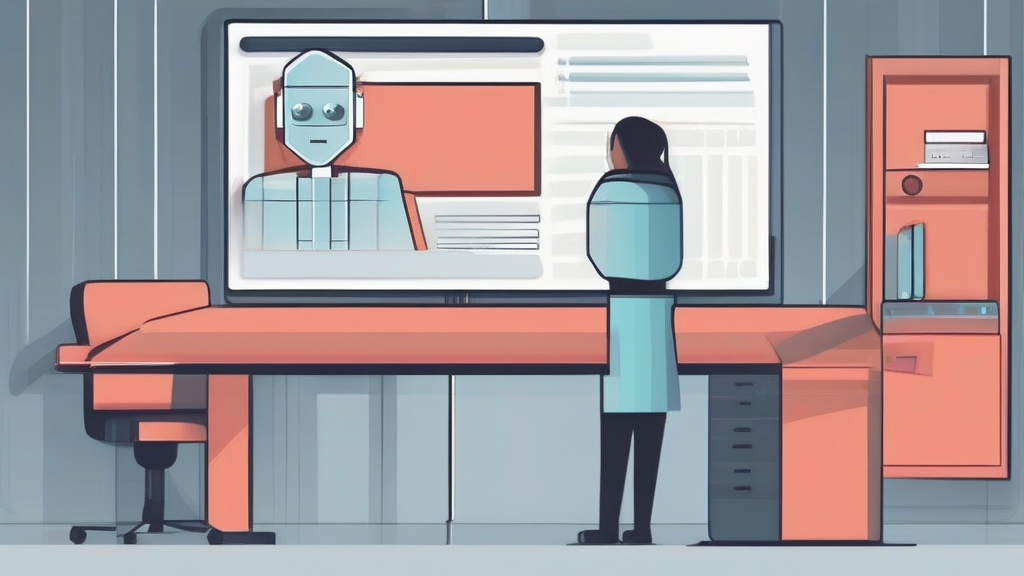
Ever find yourself chatting with a customer service bot and wondering if there’s a human on the other side? We’ve all been there. It brings up that age-old question: can a machine actually think? When people talk about this, they almost always bring up Alan Turing. If you want to understand where our obsession with smart machines started, you need The Turing Test Explained: A 70-Year History of AI’s Most Famous Benchmark.
I’ve spent years watching the tech world obsess over whether an algorithm can fool a human. It’s a fascinating, messy, and often misunderstood topic. Let’s clear the air and look at what this benchmark actually does, and more importantly, what it doesn't do.
The Turing Test Explained: A 70-Year History of AI’s Most Famous Benchmark
Back in 1950, Alan Turing published a paper that changed everything. He proposed the "Imitation Game." The idea was simple: if a human judge chats with a computer and a human, and they can't tell which is which, the machine has "passed."
It wasn't meant to be a rigid scientific rule. It was a thought experiment. Turing was trying to move the conversation away from the philosophical nightmare of defining "consciousness." Instead, he wanted something observable.
Why the Benchmark Still Matters Today
You might think a 70-year-old idea is obsolete in the age of Large Language Models. Not quite. Even though our tech has leaped forward, the core question remains the same. We are still chasing that feeling of "humanness" in our software.
For business owners, this matters because it changes how we build tools. We aren't just looking for efficiency anymore. We are looking for empathy, nuance, and the ability to handle the weird, unpredictable nature of human language.
Common Misconceptions About AI Benchmarks
People often think that passing the test means the machine is "thinking." That’s a massive leap. Let’s break down the myths that keep popping up in tech circles.
- Myth 1: Passing the test equals sentience. Nope. A machine can be a great mimic without having a single "thought" or feeling.
- Myth 2: It was designed to measure intelligence. Actually, it was designed to measure the ability to imitate human conversation. There is a difference.
- Myth 3: Modern AI has already passed it. Depending on who you ask, some chatbots have "passed" under very specific, limited conditions. But a general pass? That’s still up for debate.
Think of it like a parrot. If a parrot learns to say "I love you," does it understand the weight of that statement? Probably not. It just knows that sound gets a positive reaction. AI is often just a very, very sophisticated parrot.
Does the Test Actually Measure Intelligence?
This is where things get sticky. If you ask a calculator to solve a complex equation, it’s vastly more intelligent than a human. Yet, if you ask it about its favorite childhood memory, it fails instantly. The Turing test prioritizes social performance over raw computational power.
Many researchers argue that the test is actually a measure of deception. A machine that is too smart—like one that calculates the perfect answer in a nanosecond—might actually fail because it’s "too perfect." Humans are messy. We make typos, we get distracted, and we forget names.
The Role of Human Bias
We are surprisingly easy to fool. When we see a response that looks grammatically correct and empathetic, our brains automatically fill in the blanks. We project humanity onto the screen because it’s easier than assuming we’re talking to a bunch of math equations.
This psychological quirk is why Artificial Intelligence continues to surprise us. We aren't just evaluating the machine; we are evaluating our own tendency to anthropomorphize everything we encounter.
What Should We Use Instead?
If the Turing test isn't the gold standard, what is? Most experts now look at functional benchmarks. Can the AI write code? Can it summarize a legal document without hallucinating facts? Can it solve a novel logic puzzle?
These are "hard" metrics. They don't care about whether the machine sounds like a person. They care about utility. For your business, you don't need a bot that can pass a conversational test; you need a bot that can actually do the work you pay it for.
Moving Beyond Imitation
We need to stop asking if machines can act like us and start asking if they can augment us. The best tools aren't the ones that trick you into thinking they’re human. The best tools are the ones that save you hours of mundane labor.
I find that when we stop chasing the "human-like" ghost, we actually get better results. We stop trying to make software "polite" and start making it "useful."
The Future of Machine Evaluation
Are we going to keep using this 70-year-old benchmark? Probably, because it’s a great hook. It captures our imagination. But behind the scenes, the industry is moving toward more rigorous, task-specific testing.
We are entering an era where the Turing test is more of a historical artifact than a technical roadmap. It’s like the Wright brothers' first flight—important for history, but not how we build modern jets today.
How to Evaluate AI for Your Business
If you're looking to integrate AI into your workflow, don't worry about whether it passes a conversation test. Ask these questions instead:
- Does it save my team time on repetitive tasks?
- Is the output accurate enough to be reliable?
- Does it integrate with the tools we already use?
- What happens when it gets something wrong?
If you focus on those four points, you’ll be ahead of 90% of the people still arguing about whether a chatbot is "truly alive."
Why We Still Care About the "Human" Factor
Even with all our technical progress, there’s a part of us that wants that human connection. We crave interaction. This is why we see so much effort poured into making AI sound friendly, witty, or even sarcastic.
But remember: a machine that sounds like a friend is still just a machine. It doesn't have a history, it doesn't have fears, and it doesn't have a future. It has data. Lots and lots of data.
There is a unique beauty in the fact that we are still trying to bridge this gap. We are essentially trying to build a mirror that reflects our own intelligence back at us. That’s a profound project, even if it doesn't always go according to plan.
Reflecting on the Legacy
Alan Turing gave us a goal that was both simple and impossibly complex. He gave us a yardstick that we’ve been using to measure our progress for decades. While we might outgrow the test itself, we won't outgrow the questions it forces us to ask.
What does it mean to be smart? What does it mean to communicate? These are the questions that will define the next 70 years of technology. We aren't just building better software; we are learning more about ourselves in the process.
Next time you see a headline about an AI passing a benchmark, take a breath. Look past the hype. Ask yourself if the machine is actually doing something valuable, or if it’s just putting on a good show. That distinction is the difference between a fad and a genuine advancement.
If you’re feeling overwhelmed by the pace of change, you’re not alone. The best approach is to stay curious, keep testing things for yourself, and never take a marketing claim at face value. Technology is a tool, and you are the one holding the handle. How will you use it to move your own goals forward today?
Thank you for reading my article carefully, thoroughly, and wisely. I hope you enjoyed it and that you are under the protection of Almighty God. Please leave a comment below.
Post a Comment for "Turing Test FAQ: Answering the Most Common Misconceptions About AI Benchmarks"