The Ethical Implications of Machines Competing in Human Games
Welcome to my blog theaihistory.blogspot.com, a comprehensive journey chronicling the evolution of Artificial Intelligence, where we will delve into the definitive timeline of AI that has reshaped our technological landscape. History is not just about the distant past; it is the foundation of our future. Here, we will explore the fascinating milestones of machine intelligence, tracing its roots back to the theoretical brilliance of early algorithms and Alan Turing's groundbreaking concepts that first challenged humanity to ask whether machines could think. As we trace decades of historical breakthroughs, computing's dark ages, and glorious renaissance, we will uncover how those early mathematical dreams paved the way for today's complex neural networks. Join us as we delve into this rich historical tapestry, culminating in the transformative modern era of Generative AI, to truly understand how this revolutionary technology has evolved from mere ideas to systems redefining the world we live in. Happy reading..
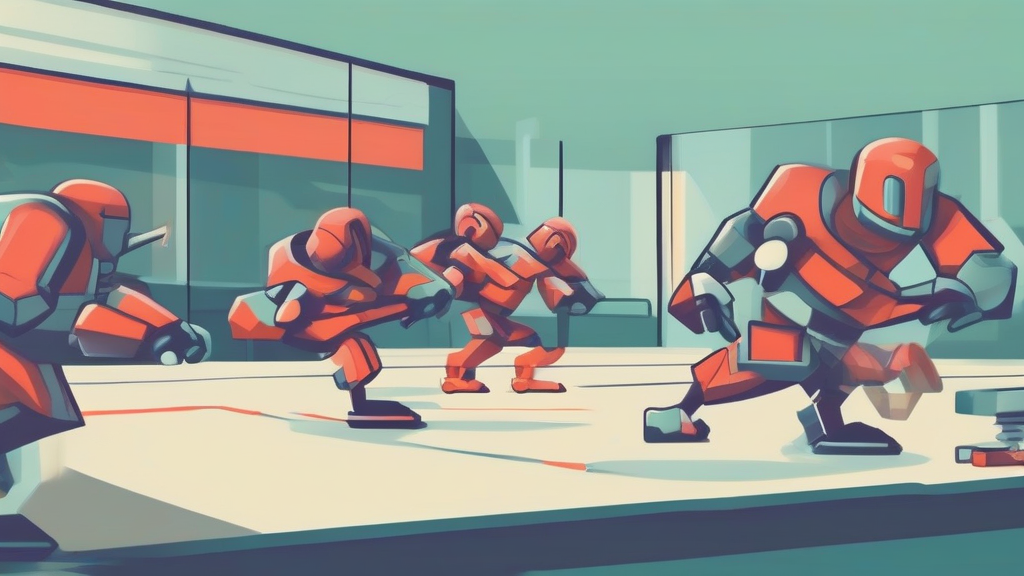
When we talk about the ethical implications of AI games, we aren't just discussing lines of code. We are peeling back the skin of digital reality to see what happens when silicon mimics human competitive spirit. I have spent fifteen years watching software evolve from simple scripts into entities that can dismantle grandmasters in chess or dominate professional e-sports. It feels less like a competition and more like a mirror reflecting our own flaws.
Key Insights
- Machine dominance in games often erodes the sense of human achievement and reward.
- Algorithmic bias can manifest in game matchmaking, creating unfair environments for specific player demographics.
- Data privacy remains a massive hurdle, as games harvest biometric and behavioral patterns to refine AI models.
- The line between "fair play" and "algorithmic cheating" is blurring as AI agents learn to exploit game engine physics.
Think of AI in gaming like a professional athlete entering a local neighborhood pickup basketball game. The skill gap is so massive that the competitive integrity of the game vanishes instantly.
When machines compete against humans, they don't play for glory or social connection. They play to satisfy an objective function—usually winning at all costs.
The Structural Challenges of AI Fairness
The Artificial intelligence boom has fundamentally changed how we design difficulty curves. Developers now use neural networks to create dynamic difficulty adjustment, but this can lead to "frustration loops."
If a machine knows exactly when you are about to lose, it can manipulate the game state to keep you playing longer. This isn't just gaming; it is psychological conditioning. It raises serious concerns about Ethics in design.
| Factor | Human Player | AI Agent |
|---|---|---|
| Motivation | Entertainment/Social | Optimization/Goal-seeking |
| Adaptability | Emotional/Heuristic | Data-driven/Recursive |
| Accountability | High (Social cost) | Zero (Black box) |
Evaluating the Ethical Implications of AI Games in Competitive Spaces
When we allow machines to compete in high-stakes environments, we sacrifice the human narrative. A machine cannot feel the weight of a comeback win. It simply processes the state space.
We risk creating a "winner-take-all" digital ecosystem where human input is devalued. If the machine always wins, the incentive to improve disappears. We stop playing to learn and start playing to survive against an unbeatable wall.
Transparency is our only shield. Developers must disclose when a player is facing an AI agent. Pretending a machine is a human opponent is a fundamental breach of trust.
Addressing Algorithmic Bias and Data Harvesting
Hidden biases in training data often leak into the game’s logic. If the AI is trained on toxic datasets, it will reproduce that toxicity toward the player. It turns the gaming experience into a hostile environment.
Furthermore, the data collected during these sessions is often sold to third parties. Every click, reaction time, and decision-making delay feeds back into the machine's learning cycle. You are not just a player; you are a data point in a grand training experiment.
Why Transparency Matters
We need strict regulations on AI disclosure in gaming. Players have a right to know if their competitive ranking is being influenced by non-human actors. Without this, the competitive leaderboard becomes a work of fiction.
Frequently Asked Questions
Is it cheating if a developer uses AI to balance matchmaking?
It depends on transparency. If the system secretly puts you against AI to ensure you don't quit the game, it is a form of manipulation rather than competitive balancing.
Can AI actually understand the spirit of a game?
No. AI understands game rules as mathematical constraints, not as a social contract. It lacks the capacity to appreciate the "fun" or "honor" that humans bring to a match.
How can I tell if I am playing against a bot?
Look for inhuman consistency. Bots rarely make "human errors" like lapses in focus, and their reaction times often defy biological limits. If a player never hesitates, you are likely facing code.
The future of gaming shouldn't be about machines outperforming humans. It should be about using technology to enhance the human experience, not replacing the very people who built the game in the first place. Demand transparency from your favorite platforms and keep your eyes open during your next match.
Thank you for reading my article carefully, thoroughly, and wisely. I hope you enjoyed it and that you are under the protection of Almighty God. Please leave a comment below.
Post a Comment for "The Ethical Implications of Machines Competing in Human Games"