Where to Find Alan Turing's Original Papers and Archival Documents Online
Welcome to my blog theaihistory.blogspot.com, a comprehensive journey chronicling the evolution of Artificial Intelligence, where we will delve into the definitive timeline of AI that has reshaped our technological landscape. History is not just about the distant past; it is the foundation of our future. Here, we will explore the fascinating milestones of machine intelligence, tracing its roots back to the theoretical brilliance of early algorithms and Alan Turing's groundbreaking concepts that first challenged humanity to ask whether machines could think. As we trace decades of historical breakthroughs, computing's dark ages, and glorious renaissance, we will uncover how those early mathematical dreams paved the way for today's complex neural networks. Join us as we delve into this rich historical tapestry, culminating in the transformative modern era of Generative AI, to truly understand how this revolutionary technology has evolved from mere ideas to systems redefining the world we live in. Happy reading..
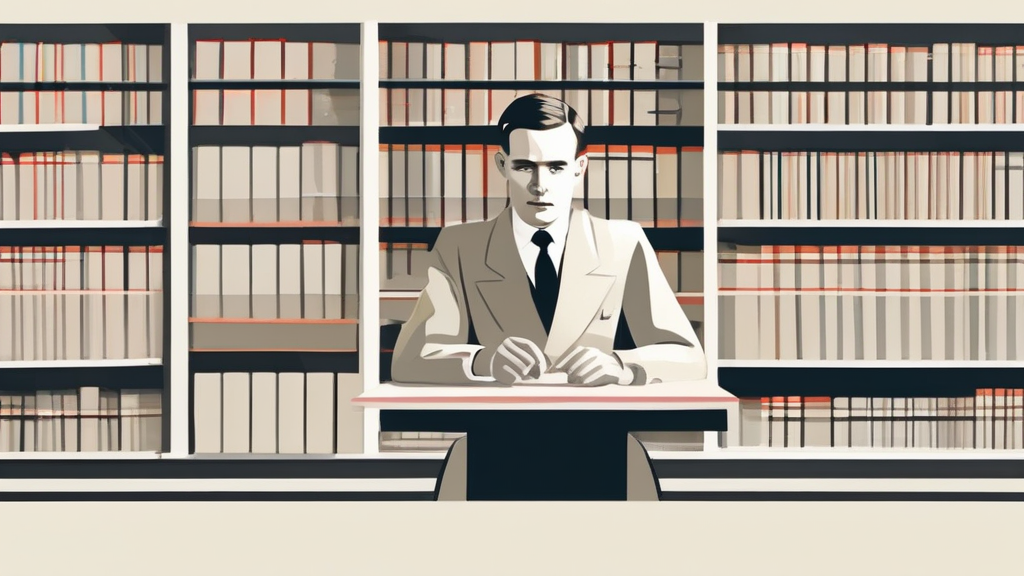
Unearthing the Digital Footprints of a Genius: Your Guide to Alan Turing's Online Archives
There's something truly special about connecting with history, isn't there? For me, as someone fascinated by the minds that shaped our modern world, few figures loom as large as Alan Turing. He was a man whose brilliant, often tragic, life laid the very groundwork for what we now call artificial intelligence and computer science. His groundbreaking work truly represents The Dawn of AI: Alan Turing and the Machine That Could Think, a pivotal moment in human ingenuity.
Perhaps you're a history buff, a student, a researcher, or just someone curious about the origins of the digital age. Whatever your reason, if you've ever wondered where to find Alan Turing's original papers and archival documents online, you're in the right place. It's not always as straightforward as a simple Google search, but with a bit of guidance, you can navigate the digital repositories holding his incredible legacy.
I remember the first time I stumbled upon a digitized page of his handwritten notes – it felt like a direct line to his thought process. The sheer thrill of seeing his equations, his ideas taking shape on paper, is incomparable. So, let's embark on this digital treasure hunt together, shall we?
Why Alan Turing's Work Still Matters Today
Before we jump into the "where," let's quickly touch on the "why." Why is it so important to access these historical documents? Well, Turing wasn't just a mathematician; he was a visionary. His concepts, like the Turing machine, were abstract ideas long before physical computers existed.
His wartime efforts at Bletchley Park, cracking the Enigma code, undoubtedly shortened World War II and saved countless lives. But beyond that immediate impact, his theoretical work on computability and intelligence laid the essential foundation for every computer, smartphone, and AI algorithm we use today.
The Enduring Legacy of a Visionary
Think about it: every time you ask Siri a question, or a self-driving car navigates a street, you're witnessing the distant echoes of Turing's original ideas. His profound insights into what a "machine that could think" might entail were decades ahead of their time. Without his foundational contributions, the digital revolution would look vastly different, if it even happened at all in the way we know it.
Studying his original papers offers an unparalleled glimpse into the mind of someone who literally invented the future. It's not just about historical curiosity; it's about understanding the deep roots of our technological present.
The Hunt for Digital Archival Treasures: Where to Begin
Finding original historical documents online can sometimes feel like searching for a needle in a digital haystack. Fortunately, many institutions have made tremendous strides in digitizing their collections, making them accessible to a global audience. When it comes to The Dawn of AI: Alan Turing and the Machine That Could Think, several key players hold the keys to his intellectual vault.
My own journey into online archives started with a lot of dead ends, but also some incredible discoveries. The trick is knowing which institutions are most likely to house the specific types of documents you're after. Are you looking for personal letters, mathematical proofs, government reports, or something else entirely?
Major Institutions Holding Turing's Legacy
When we talk about Alan Turing, a few names immediately come to mind regarding his archival material. These are the institutions that were central to his life and work, and consequently, are the primary custodians of his legacy. They've invested significantly in making these precious documents available.
Let's break down the main players you'll want to explore first.
King's College, Cambridge: A Primary Source for Turing's Papers
If there's one place that truly stands as the epicenter for Alan Turing's personal and academic papers, it's King's College, Cambridge. Turing was a student and later a Fellow at King's, and the college library holds the most extensive collection of his manuscripts.
Their archive is a goldmine. We're talking about his mathematical notebooks, his early work on computability, personal letters, and even some of his philosophical musings. It's truly incredible to see the raw thought processes of such a brilliant mind.
The good news? A significant portion of these materials has been digitized and is available online. You can often browse through high-resolution scans of his handwritten notes, which really brings his work to life. It’s a remarkable resource for anyone interested in his theoretical contributions to computer science.
To access these, you'll want to head to the King's College Archive Centre website. They typically have a dedicated section for their Turing papers. While not everything might be digitized, they offer detailed catalogs and finding aids that can guide you to what's available digitally and what might require a physical visit (though the latter is less common for general browsing). For more background on the institution itself, you might find the Wikipedia page for King's College, Cambridge quite informative.
Bletchley Park Trust: Unveiling the Wartime Genius
Next up, we have Bletchley Park. This is the place where Turing's theoretical brilliance met real-world, high-stakes application. During World War II, this unassuming estate became the top-secret hub for British code-breaking efforts, and Turing was a pivotal figure there.
While King's College focuses more on his academic papers, Bletchley Park's archives tend to shed light on his wartime contributions, the practical challenges of code-breaking, and the collaborative environment he worked in. You might not find his abstract mathematical proofs here, but you'll certainly find documents related to the machines he helped design, like the Bombe, and the operational aspects of their work.
The Bletchley Park Trust has done an amazing job of preserving this history and making it accessible. Their website is a fantastic resource, often featuring digital exhibits, timelines, and even some digitized documents or transcripts that relate directly to Turing's time there. They also have an extensive online shop where you can find books and replicas, which, while not primary documents, offer great context.
If you're particularly interested in the practical applications of his genius during the war, and how his ideas were put into action to solve one of the most pressing problems of the era, Bletchley Park's online resources are indispensable. To learn more about the historic site and its role, check out the Wikipedia article on Bletchley Park.
The National Archives (UK): Official Records and More
Beyond academic institutions and historical sites, official government records often contain crucial pieces of the puzzle. The National Archives in the UK holds a vast collection of government documents, and Alan Turing's life intersected significantly with the state, both through his wartime work and, tragically, through his later prosecution.
Here, you're likely to find different types of documents: official reports, security clearances, correspondence between government departments, and records pertaining to his trial and subsequent pardon. These documents offer a more institutional perspective on his life and the societal context in which he operated.
The National Archives has a robust online catalog that allows you to search for specific individuals and topics. While not every document will be digitized for direct viewing, their catalog entries often provide detailed descriptions, and some documents are available as digital downloads (sometimes for a fee, but often free for older materials). It's a treasure trove for understanding the broader historical and political landscape surrounding Turing's life.
My advice? Use specific search terms like "Alan Turing," "Bletchley Park," "Enigma," or "Government Code and Cypher School" to narrow down your results. You might be surprised by what official records reveal about the human side of history.
Other Digital Repositories and Academic Databases
While King's College, Bletchley Park, and The National Archives are your primary stops, the digital world is vast. Other institutions and platforms also host relevant materials, either directly or indirectly related to Turing.
University Libraries and Research Portals
Turing also spent time at other universities, notably the University of Manchester, where he worked on the Manchester Mark 1 computer, one of the earliest electronic stored-program computers. Their library archives might hold some unique documents related to this period of his work. Many university libraries have their own digital collections or participate in larger academic search portals.
Furthermore, broader academic databases and aggregators often include published papers by Turing or articles about him. While these might not be his original handwritten notes, they are crucial for understanding the scholarly reception and development of his ideas. Think about platforms like JSTOR, Project MUSE, or even Google Scholar. These are excellent for finding secondary sources and published versions of his work.
You might also find digitized copies of historical newspapers or magazines that reported on his work or life. These offer a fascinating contemporary perspective, even if they aren't his personal papers.
Navigating the Digital Labyrinth: Tips for Your Research
Okay, so you know where to look. Now, let's talk about how to look effectively. Online archives can be a bit overwhelming at first, but with a few strategies, you can make your search much more productive.
I've spent countless hours sifting through digital collections, and I've learned that patience and precise searching are your best friends.
Effective Search Strategies for "The Dawn of AI: Alan Turing and the Machine That Could Think"
When you're trying to trace the origins of concepts like The Dawn of AI: Alan Turing and the Machine That Could Think, broad searches might yield too many results, while overly specific ones might miss something important. Here are some tips:
- Use Specific Keywords: Beyond just "Alan Turing," try "Turing machine," "computability," "Enigma," "cryptography," "Bombe machine," "Manchester Mark 1," or "artificial intelligence theory."
- Employ Boolean Operators: Use "AND," "OR," and "NOT" to refine your searches. For example, "Alan Turing AND Enigma NOT Bletchley Park" (if you want to focus on his theoretical work on Enigma, not just the site itself).
- Explore Finding Aids and Catalogs: Most reputable archives provide detailed finding aids, which are like maps to their collections. These often list document series, box numbers, and sometimes even individual item descriptions. Read these carefully!
- Check Metadata: When you find a digitized document, look at its metadata (information about the document, like creation date, author, and subjects). This can give you clues for further searches or help you understand the context.
- Be Patient: Seriously, this isn't always a quick process. Sometimes you have to dig through multiple pages of results or try different search terms. The reward, however, is often worth the effort.
- Look for Transcriptions: Handwritten documents can be tough to read. Many archives provide transcriptions alongside the original images, which are incredibly helpful.
Remember, the goal isn't just to find any document, but the right documents that illuminate the aspects of Turing's work you're most interested in. Whether it's his philosophical ideas on machine intelligence or his groundbreaking mathematical proofs, the right search strategy makes all the difference.
What You Can Expect to Find (and What You Might Not)
So, what exactly can you hope to uncover in these digital archives? You'll likely find a fascinating array of materials:
- Handwritten Notes and Manuscripts: These are the gems – direct insights into his thought process, mathematical derivations, and early drafts of his theories.
- Correspondence: Letters to colleagues, family, and friends can reveal personal insights, scientific debates, and the social context of his life.
- Published Papers and Articles: While often available elsewhere, seeing them within an archival context can add depth.
- Official Reports and Memoranda: Especially from his time at Bletchley Park or related to government matters.
- Photographs and Visual Materials: Though less common as "documents," these can provide invaluable context.
What you might not find, at least not easily, are highly personal diaries (he wasn't known for keeping them extensively in a public-facing way), or every single scrap of paper he ever wrote on. Digitization is a massive undertaking, and archives prioritize what they believe is most historically significant or frequently requested.
Also, some materials might be restricted due to privacy concerns (though less likely for someone of Turing's historical distance) or copyright. Always respect the terms of use for any archival material you access.
The Thrill of Discovery
My own experience with these archives has always been one of profound discovery. There's a particular magic in seeing the actual handwriting of a historical figure, imagining them at their desk, grappling with complex ideas. It grounds their story and makes their genius feel more tangible, more human.
Alan Turing's legacy is immense, defining so much of our technological landscape. Exploring his original papers online is more than just a historical exercise; it's a way to connect directly with the very genesis of our digital world. It's about understanding The Dawn of AI: Alan Turing and the Machine That Could Think not just as a concept, but as a journey taken by one extraordinary individual.
So, go forth and explore! The digital doors to his brilliant mind are open. Take the time to delve into these incredible resources. You might just find yourself inspired by the sheer audacity of his ideas and the enduring power of human intellect.
Thank you for reading my article carefully, thoroughly, and wisely. I hope you enjoyed it and that you are under the protection of Almighty God. Please leave a comment below.
Post a Comment for "Where to Find Alan Turing's Original Papers and Archival Documents Online"