Where Is the Original IBM Watson Server Now? A Tech History Inquiry
Welcome to my blog theaihistory.blogspot.com, a comprehensive journey chronicling the evolution of Artificial Intelligence, where we will delve into the definitive timeline of AI that has reshaped our technological landscape. History is not just about the distant past; it is the foundation of our future. Here, we will explore the fascinating milestones of machine intelligence, tracing its roots back to the theoretical brilliance of early algorithms and Alan Turing's groundbreaking concepts that first challenged humanity to ask whether machines could think. As we trace decades of historical breakthroughs, computing's dark ages, and glorious renaissance, we will uncover how those early mathematical dreams paved the way for today's complex neural networks. Join us as we delve into this rich historical tapestry, culminating in the transformative modern era of Generative AI, to truly understand how this revolutionary technology has evolved from mere ideas to systems redefining the world we live in. Happy reading..
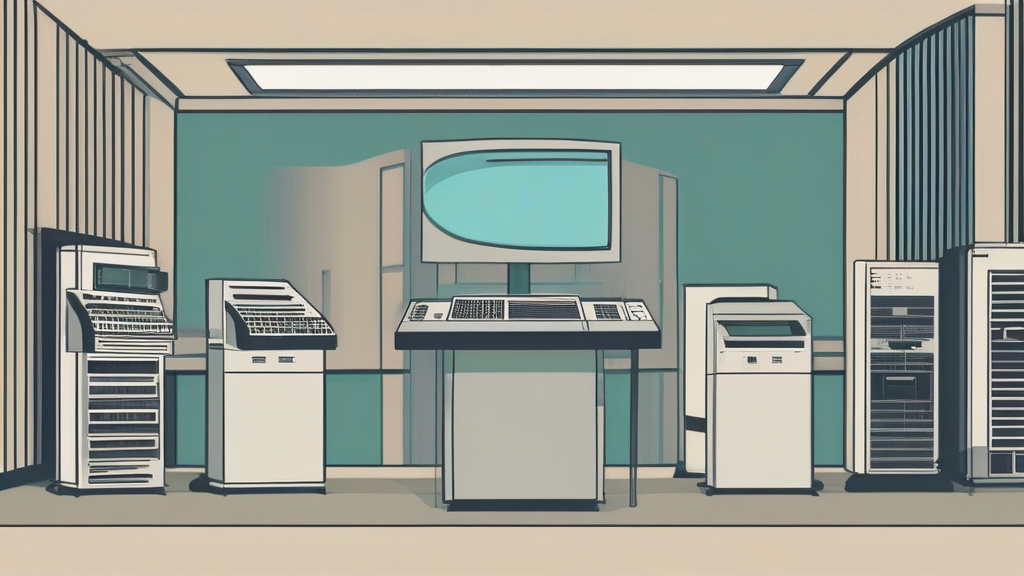
If you are hunting for the original IBM Watson server, you might be surprised to learn it isn't humming in a secret basement. It is actually retired, resting peacefully among the legends of silicon and steel. Tracking down a piece of hardware that changed the trajectory of artificial intelligence feels like an archeological dig. We aren't just talking about a box of wires. We are talking about the machine that dismantled human ego on live television.
Key Insights
- The physical hardware that competed on Jeopardy! is now housed at the Computer History Museum in Mountain View, California.
- The system was comprised of 90 IBM POWER 750 servers running Linux.
- Modern "Watson" branding refers to a cloud-based software suite, not a single physical supercomputer.
- The original project was a product of the DeepQA research initiative started in 2006.
Most people imagine Watson as a sleek, singular computer. In reality, it was a cluster of 90 individual servers packed into ten massive racks.
Think of it like a professional rowing team. One rower can't move the boat fast enough to win, but ninety of them working in perfect synchronization create an unstoppable force. That is how the system processed massive amounts of unstructured data to find answers in seconds.
The Evolution of the Original IBM Watson Server
When the Jeopardy! challenge concluded in 2011, IBM didn't just toss the gear in a dumpster. They kept it for research, eventually decommissioning the physical units as cloud computing moved the workload to virtualized environments.
| Feature | Original Watson System | Modern Watson (watsonx) |
|---|---|---|
| Primary Location | Computer History Museum | IBM Cloud / Hybrid Infrastructure |
| Hardware | 90 POWER 750 Servers | Cloud-based GPU/TPU Clusters |
| Core Focus | Question Answering (QA) | Generative AI & Foundation Models |
The transition from a fixed physical box to a software-as-a-service model changed everything. Today, "Watson" is a brand name for a collection of AI tools, not a specific rack of hardware you can walk up to and touch.
Why the original IBM Watson server matters today
We often forget how difficult it was to parse natural language back in 2011. The original system had to navigate puns, riddles, and cultural nuances that would make a standard search engine choke.
It didn't use the internet to find answers. It relied on a massive local database stored entirely in its own RAM. This brute-force approach to processing power set the stage for the generative models we see everywhere today.
Where to see the hardware in person
If you find yourself in the Bay Area, make a pilgrimage to the Computer History Museum. They hold a significant portion of the original POWER 750 units. It serves as a physical reminder of where the current AI gold rush actually started.
How long did the original system take to build?
The DeepQA project began in 2006. It took roughly four years of intense development and calibration before the system was ready to face human champions on stage.
Is the machine at the museum the entire system?
It contains the core components used during the Jeopardy! matches. While not every single redundant cable from the original data center is there, the physical processing units are preserved.
Can I buy an original IBM Watson server for my office?
Technically, the POWER 750 series is legacy hardware. You might find individual blades on secondary markets, but they are power-hungry, loud, and vastly outperformed by a modern laptop. They belong in a museum, not a server rack.
The legacy of the original Watson isn't in the metal; it’s in the logic. We have moved from a world of "question and answer" machines to a world of "generative and creative" AI. Whether you are building an AI startup or just curious about tech history, remember that every massive shift starts with a few racks of servers and a lot of persistence.
Thank you for reading my article carefully, thoroughly, and wisely. I hope you enjoyed it and that you are under the protection of Almighty God. Please leave a comment below.
Post a Comment for "Where Is the Original IBM Watson Server Now? A Tech History Inquiry"