Best Documentaries About the History of Early Computing Machines
Welcome to my blog theaihistory.blogspot.com, a comprehensive journey chronicling the evolution of Artificial Intelligence, where we will delve into the definitive timeline of AI that has reshaped our technological landscape. History is not just about the distant past; it is the foundation of our future. Here, we will explore the fascinating milestones of machine intelligence, tracing its roots back to the theoretical brilliance of early algorithms and Alan Turing's groundbreaking concepts that first challenged humanity to ask whether machines could think. As we trace decades of historical breakthroughs, computing's dark ages, and glorious renaissance, we will uncover how those early mathematical dreams paved the way for today's complex neural networks. Join us as we delve into this rich historical tapestry, culminating in the transformative modern era of Generative AI, to truly understand how this revolutionary technology has evolved from mere ideas to systems redefining the world we live in. Happy reading..
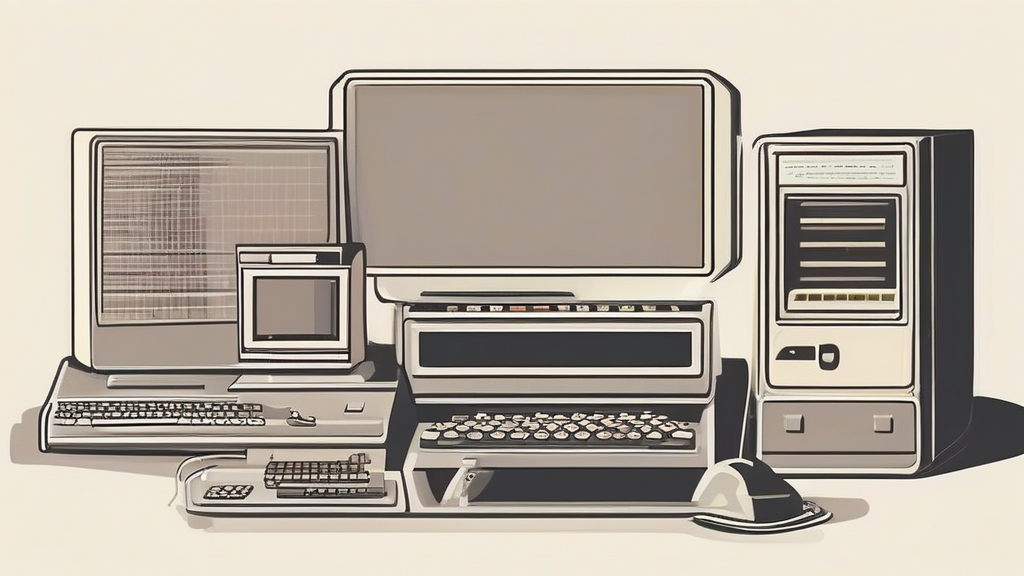
Tracing the Roots of Modern Innovation Through Film
Ever wonder how we went from massive, clunky mechanical gears to the sleek smartphones in our pockets? It’s a wild ride. The history of computing isn't just a dry list of dates and dusty hardware. It is a story of obsession, genius, and a few people who saw the future long before it arrived.
When I started looking into the origins of our digital world, I realized that many of the answers were captured in brilliant documentaries. If you want to understand the foundations of our current tech, you have to look at Before Computers: Ada Lovelace and the 19th-Century Vision of AI. She wasn't just a mathematician; she was a visionary who understood that machines could do more than just crunch numbers.
Seeing these stories on screen brings the technical jargon to life. You start to realize that the challenges faced by 19th-century thinkers aren't so different from the ones software engineers face today. Let's look at some of the best documentaries that map out this incredible timeline.
The Visionaries Who Built the Foundation
Before we had silicon chips, we had brass, steam, and sheer grit. Early pioneers were essentially building the logic of the universe out of metal. It’s easy to think of computers as a 20th-century invention, but the roots go back much further.
Ada Lovelace: The First Programmer
You cannot talk about the history of computing without mentioning Ada Lovelace. She is widely considered the first computer programmer, having written an algorithm intended to be carried out by a machine. Her work on the Analytical Engine is the stuff of legend.
Watching documentaries about her life is humbling. She saw the potential for machines to compose music or create graphics, essentially predicting the digital age before it existed. Her foresight is a reminder that the most important part of any machine is the human imagination behind it.
Charles Babbage and the Analytical Engine
Then there is Charles Babbage. He was the grumpy, brilliant mind who designed the Analytical Engine. His story is filled with frustration, lack of funding, and the struggle to get his designs built. It's a classic tale of a man being too far ahead of his time.
Documentaries covering Babbage often highlight the physical beauty of his designs. Seeing these gears and cams in motion makes you realize that, at its core, computing is just a series of physical logical steps. It’s mechanical, it’s rhythmic, and it’s undeniably fascinating.
Documentaries That Bridge the Gap
Finding the right documentary can be a chore, but once you find one that clicks, it’s hard to stop. I’ve spent countless weekends binging these films, and a few stand out as essential viewing for anyone curious about how we got here.
The Secret Life of Machines
This series is a personal favorite. Tim Hunkin takes apart everyday machines to show us how they work. While it covers a lot of ground, the episodes on computing are gold. He explains things in a way that feels like a chat with a friend who happens to be a mechanical genius.
Why does this matter for your business or your curiosity? Because understanding how things break is the best way to understand how they work. You learn to appreciate the simplicity behind the complexity.
Calculating Ada: The Countess of Computing
If you really want to grasp the significance of Before Computers: Ada Lovelace and the 19th-Century Vision of AI, this is the film to watch. It digs deep into the social constraints of the 1800s and how Lovelace navigated them to make her mark on science.
It’s not just about math. It’s about the spirit of innovation. It shows that even when the technology isn't ready for your ideas, you keep building the framework anyway. That’s a lesson every entrepreneur should take to heart.
Why Understanding Early Computing Matters
You might ask why a business owner or a tech enthusiast should care about 19th-century hardware. The answer is simple: patterns. The history of tech is cyclical. We keep reinventing the same logical problems, just with faster hardware.
When you look at the history of computing, you see the same themes repeat: data processing, automation, and the quest for efficiency. By learning from the past, you gain a better perspective on where AI and automation are heading next.
- Persistence pays off: Most early inventors failed multiple times before getting it right.
- Interdisciplinary thinking: Lovelace combined poetry and math, which is exactly how modern AI design works today.
- Documentation is key: The only reason we know about these machines is because people took the time to write down their processes.
Think about your own workflow. Are you using tools that were designed to solve problems from a hundred years ago, or are you looking for a new way to structure your logic? Sometimes, the most "modern" solution is just a better version of an old, overlooked idea.
The Evolution of AI Concepts
When we talk about artificial intelligence, we often forget that the conversation started centuries ago. The idea of a "thinking machine" wasn't birthed in a Silicon Valley garage. It was a philosophical question that occupied the minds of mathematicians and writers long before the first vacuum tube was ever soldered.
The 19th-century vision of AI was focused on the limits of what a machine could "know." Today, we are pushing those boundaries, but the core question remains: can a machine truly imitate human thought? Watching documentaries on this topic helps frame the modern AI debate in a much larger, more meaningful context.
It’s easy to get caught up in the hype of the latest software release. But when you step back and look at the trajectory, you see that we are just adding layers to the foundation laid by Lovelace, Babbage, and their contemporaries. They built the map; we’re just driving the car.
How to Choose Your Next Watch
With so many options out there, where do you start? Don't just pick the one with the highest production value. Look for stories that focus on the people.
I always suggest starting with something that focuses on a specific person or machine. It makes the technical details feel personal. If you’re into the mechanical side, look for films that feature working replicas of early engines. There is something mesmerizing about watching a 19th-century machine actually calculate a logarithm.
If you prefer the intellectual history, look for documentaries that interview historians and computer scientists. They bridge the gap between the past and the present, showing you exactly how a 19th-century punch card relates to the code you run on your server today.
Final Thoughts on the Digital Journey
The history of computing is an ongoing saga. It didn't end with the invention of the microchip, and it certainly didn't start with the internet. It is a long, winding road of human curiosity, trial and error, and the occasional stroke of absolute genius.
By engaging with Before Computers: Ada Lovelace and the 19th-Century Vision of AI, you aren't just watching a history lesson. You are arming yourself with the context needed to understand the tools you use every single day. Whether you are a coder, a business owner, or just someone who loves a good story, there is something in these documentaries for you.
So, grab some popcorn, pick a documentary, and get ready to see your computer in a whole new light. You might just find that the future looks a lot like the past, just with better lighting. What are you waiting for? Start your journey back to the roots of logic today.
Thank you for reading my article carefully, thoroughly, and wisely. I hope you enjoyed it and that you are under the protection of Almighty God. Please leave a comment below.
Post a Comment for "Best Documentaries About the History of Early Computing Machines"