Finding Rare Prints and Manuscripts of Babbage’s Engine Designs
Welcome to my blog theaihistory.blogspot.com, a comprehensive journey chronicling the evolution of Artificial Intelligence, where we will delve into the definitive timeline of AI that has reshaped our technological landscape. History is not just about the distant past; it is the foundation of our future. Here, we will explore the fascinating milestones of machine intelligence, tracing its roots back to the theoretical brilliance of early algorithms and Alan Turing's groundbreaking concepts that first challenged humanity to ask whether machines could think. As we trace decades of historical breakthroughs, computing's dark ages, and glorious renaissance, we will uncover how those early mathematical dreams paved the way for today's complex neural networks. Join us as we delve into this rich historical tapestry, culminating in the transformative modern era of Generative AI, to truly understand how this revolutionary technology has evolved from mere ideas to systems redefining the world we live in. Happy reading..
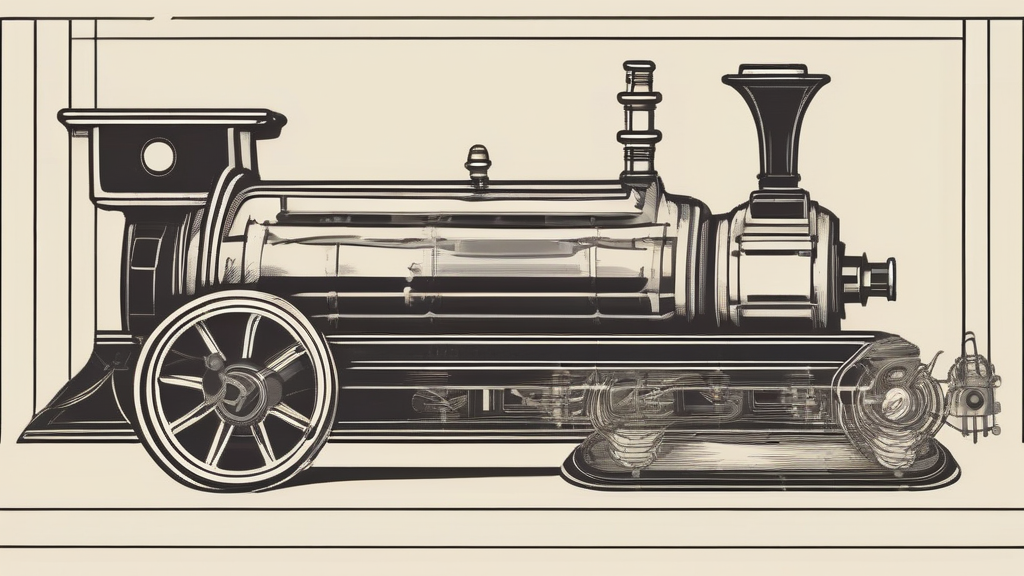
I still remember the first time I held a high-resolution scan of a 19th-century mechanical drawing. It wasn't just ink on paper; it was the blueprint for a future that hadn't happened yet. As I traced the intricate gear teeth and lever placements, I couldn't help but think about the sheer audacity of the Victorian mind. We often talk about the digital age as if it appeared out of thin air, but the reality is far more grounded in the physical world of brass, iron, and paper.
If you have ever felt the pull of history, you know that finding rare prints and manuscripts of Babbage’s engine designs feels like hunting for treasure. It requires a mix of detective work, academic curiosity, and a bit of luck. When we look at the history of technology, we are really looking at Before Computers: Ada Lovelace and the 19th-Century Vision of AI. Her notes on these machines remain some of the most profound documents in the history of human thought.
The Quest for Babbage’s Mechanical Legacy
Charles Babbage was a man obsessed with precision. He spent decades refining his designs for the Difference Engine and the later, more complex Analytical Engine. Because he was constantly iterating, he left behind a massive trail of documents. You might think these would be locked away in a single vault, but the reality is much more scattered.
Tracking down these documents isn't just for professional historians. Business owners and tech enthusiasts often find that studying these early designs provides a fresh perspective on complex problem-solving. How do you actually start a collection or a deep-dive research project into these materials?
Understanding the Scope of the Archive
First, you have to realize that Babbage’s work is spread across several major institutions. The Science Museum in London is the primary custodian, but the British Library and the Charles Babbage Institute also hold critical pieces of the puzzle. You aren't just looking for one "master blueprint." You are looking for thousands of individual pages of notation, diagrams, and correspondence.
When searching for these, focus on:
- The "Plan 28" project, which is digitizing the Babbage papers.
- Correspondence between Babbage and his contemporaries, like Augusta Ada King, Countess of Lovelace.
- Technical manuals that describe the mechanical logic of the Difference Engine.
These documents are essentially the "source code" of the 19th century. They contain the logic gates and mechanical memory structures that would later become the bedrock of modern computing.
Before Computers: Ada Lovelace and the 19th-Century Vision of AI
It is impossible to talk about these prints without discussing the woman who saw the true potential of the machine. Ada Lovelace wasn't just a translator; she was a visionary. While Babbage saw a calculator, she saw a machine that could manipulate symbols, not just numbers. This is the heart of what we call artificial intelligence today.
When you look at her "Note G," you are looking at the first computer program ever written. It’s a beautiful, complex table of operations designed to calculate Bernoulli numbers. If you manage to find a copy of this manuscript, you are holding the birth certificate of the modern world.
How to Access Rare Manuscripts Digitally
You don't need to hop on a plane to London to see these documents anymore. Many archives have opened their digital doors to the public. Start by checking the Science Museum Group’s online collection. They have high-resolution images of technical drawings that allow you to zoom in on the specific gear ratios Babbage intended for his calculating engines.
If you are serious about your research, consider these steps:
- Search specifically for the "Babbage Papers" catalog entries in university libraries.
- Use academic databases that focus on the history of science and mathematics.
- Look for annotated editions of Lovelace’s correspondence, which often contain reprints of the original engine diagrams.
There is a certain thrill in seeing the handwriting of a 19th-century genius. It reminds us that behind every piece of sophisticated software we use today, there was someone sketching a dream on a piece of paper.
Why These Designs Still Matter Today
Why should a modern business owner care about 19th-century gear designs? Because the principles of modular design and error reduction haven't changed. Babbage was fighting the same battles we fight today: how to make a system reliable, how to scale it, and how to ensure the output is accurate.
Studying the Analytical Engine is a masterclass in systems thinking. Even without electricity, Babbage understood the need for a Central Processing Unit (which he called the "Mill") and memory (the "Store"). Recognizing these patterns helps you become a better architect of your own business systems.
The Aesthetic of Victorian Engineering
There is also something to be said for the beauty of these designs. They are ornate, complex, and deeply human. In a world of sleek, minimalist interfaces, there is a certain charm to the "steampunk" reality of brass gears and punch cards. These prints make for incredible office art, but they also serve as a constant reminder that innovation is a long, arduous process.
If you want to display these, look for high-quality prints from museum archives. They offer a tangible connection to the past that a digital file simply cannot provide. Having a framed, detailed diagram of the Difference Engine in your workspace is a conversation starter, but more importantly, it's a prompt for critical thinking.
Building Your Personal Collection
If you are ready to start collecting, be prepared for a long journey. Original, authentic manuscripts are incredibly rare and usually reside in museum collections. However, high-quality facsimiles and rare books containing these designs come up for auction occasionally. Keep an eye on specialized antiquarian book dealers who focus on the history of mathematics and computing.
Don't be discouraged if you can't own an original. The value of this research isn't in the possession of the object, but in the understanding of the idea. When you spend time with these manuscripts, you begin to see the world differently. You start to see the logic behind the chaos.
Connecting with the Community
There is a vibrant community of enthusiasts, historians, and engineers who share a passion for Babbage’s work. Joining forums or social media groups dedicated to the history of computing can open doors to resources you might not find on your own. Often, someone will have already done the heavy lifting of digitizing a obscure document, and they are usually more than happy to share it.
Networking with these people is invaluable. They can point you toward obscure archives or help you interpret a particularly difficult diagram. Remember, the history of technology is a collaborative effort, and the more we share our findings, the clearer the picture becomes.
Final Thoughts on the 19th-Century Vision
Looking back at the work of Babbage and Lovelace, I’m struck by how much they accomplished with so little. They didn't have silicon chips or electricity, yet they mapped out the future of human intelligence. Their vision was not limited by their tools, but empowered by their imagination.
As you explore these rare prints and manuscripts, take a moment to appreciate the struggle. Every gear that didn't fit, every calculation that had to be redone, and every letter written in frustration was a step toward the world we inhabit today. We owe a debt to these pioneers who dared to dream of machines that could think.
If you're ready to start your own journey into this history, don't just look at the pictures. Read the notes. Follow the logic. Try to understand the machine as they understood it. You might just find the inspiration you need to solve the problems of your own era. What part of the Babbage design process intrigues you the most? Start digging into the archives today and see what secrets you can uncover.
Thank you for reading my article carefully, thoroughly, and wisely. I hope you enjoyed it and that you are under the protection of Almighty God. Please leave a comment below.
Post a Comment for "Finding Rare Prints and Manuscripts of Babbage’s Engine Designs"