Step-by-Step: Understanding the Mechanics of the Difference Engine
Welcome to my blog theaihistory.blogspot.com, a comprehensive journey chronicling the evolution of Artificial Intelligence, where we will delve into the definitive timeline of AI that has reshaped our technological landscape. History is not just about the distant past; it is the foundation of our future. Here, we will explore the fascinating milestones of machine intelligence, tracing its roots back to the theoretical brilliance of early algorithms and Alan Turing's groundbreaking concepts that first challenged humanity to ask whether machines could think. As we trace decades of historical breakthroughs, computing's dark ages, and glorious renaissance, we will uncover how those early mathematical dreams paved the way for today's complex neural networks. Join us as we delve into this rich historical tapestry, culminating in the transformative modern era of Generative AI, to truly understand how this revolutionary technology has evolved from mere ideas to systems redefining the world we live in. Happy reading..
The Clockwork Brain: How the Difference Engine Changed History
Most of us take our smartphones for granted, assuming computing is a modern invention birthed in the silicon valleys of the 20th century. However, the roots of our digital existence run much deeper, buried in the brass gears and steam-powered ambitions of the Victorian era. When we look at the legacy of Before Computers: Ada Lovelace and the 19th-Century Vision of AI, we aren't just looking at dusty blueprints. We are looking at the first true attempt to outsource human thought to metal.
I remember the first time I saw a replica of a Babbage machine. It wasn't just a calculator; it was a physical manifestation of logic. Before the era of transistors and binary code, brilliant minds were already dreaming of machines that could process complex mathematical tables without a single human error. This is the story of how they did it, and why it matters to us today.
Understanding the Mechanics of the Difference Engine
Charles Babbage, the man behind the machine, wasn't just a tinkerer. He was a visionary who realized that the biggest obstacle to scientific progress in the 1800s was the inaccuracy of human-calculated mathematical tables. Navigators, astronomers, and engineers relied on these tables, but they were riddled with mistakes caused by fatigue and human oversight.
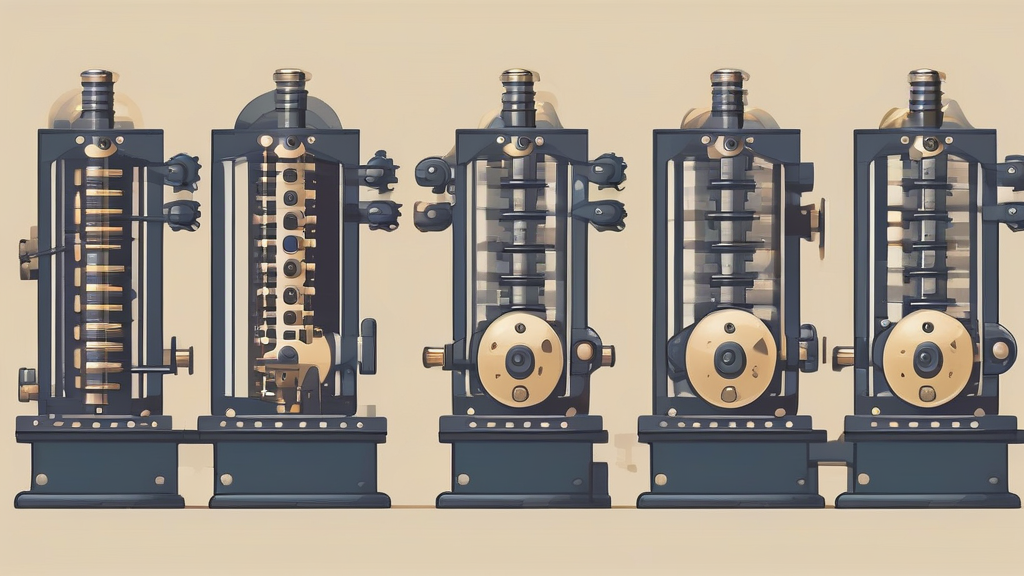
The solution was the Difference Engine, a massive mechanical calculator designed to tabulate polynomial functions. Unlike a modern computer, it didn't use electricity. It relied on the precise movement of gears, levers, and cams. If you’ve ever seen a mechanical watch, imagine that complexity magnified a thousand times, then tasked with solving the most difficult equations of the day.
The Math Behind the Brass
The engine operates on the method of finite differences. If you have a sequence of numbers, you can find the next one by calculating the difference between them, then the difference between those differences, and so on. Eventually, you reach a constant value. By reversing this process, the machine can generate an entire table of values simply by adding the same constant repeatedly.
Think of it like a staircase. If you know the height of the first step and the constant height of every subsequent step, you don't need to measure the top of the stairs every time. You just need to keep adding the same distance. The Difference Engine automated this addition process with thousands of interlocking gear wheels, each representing a digit from zero to nine.
Before Computers: Ada Lovelace and the 19th-Century Vision of AI
While Babbage built the hardware, it was Ada Lovelace who truly understood the soul of the machine. Their partnership is the stuff of legend. While Babbage saw a tool for navigation and engineering, Lovelace saw a universal engine that could manipulate symbols rather than just numbers.
She recognized that if you could represent musical notes or letters as numbers, the machine could compose music or process language. This was a radical leap in thinking. She was writing the blueprint for what we now identify as Artificial Intelligence long before anyone knew what that term meant. She didn't just see a calculator; she saw a future where machines could create.
The Poetical Science of Ada Lovelace
Lovelace called her approach "poetical science." She believed that imagination was the key to understanding the hidden laws of nature. By combining her mathematical rigor with her creative intuition, she was able to document the first algorithm intended for a machine. She understood that the machine followed instructions, but the human provided the intent.
This is where her vision intersects with our current reality. When we talk about machine learning today, we are still wrestling with the same questions she posed in her notes. Can a machine be truly creative? Or is it merely executing a complex set of pre-defined steps? Lovelace was the first to ask these questions, and in doing so, she became the patron saint of modern computing.
Why the Engine Never Fully Ran in the 1800s
It’s tempting to ask why this technology didn't take over the world immediately. If the designs were so brilliant, why did it take until the late 20th century for someone to build a fully working version? The answer is as simple as it is frustrating: manufacturing precision.
To make the Difference Engine work, every single gear had to be perfectly uniform. If one tooth was slightly off, the entire chain would jam. Victorian-era machining simply couldn't produce thousands of identical parts to the required tolerances. Babbage was trying to build a 20th-century machine with 19th-century tools.
His funding eventually dried up, and his reputation suffered. He became known as a man who could dream up impossible machines but couldn't finish them. Yet, he never gave up. He moved on to the Analytical Engine, a far more ambitious design that included a "mill" (processor) and a "store" (memory). It was, effectively, a programmable computer that existed only on paper.
Applying Victorian Lessons to Modern Business
You might wonder what a steam-era calculator has to do with your business or your daily life. The answer lies in the concept of systems thinking. Babbage and Lovelace understood that complex problems could be broken down into small, mechanical, repeatable steps.
Whether you are automating an email sequence or optimizing a supply chain, you are using the same logic the Difference Engine was built on. You are identifying the "finite differences" in your processes and automating them so your human capital can focus on higher-level creative tasks. This is the true legacy of Before Computers: Ada Lovelace and the 19th-Century Vision of AI.
Automating Your Workflow Like a 19th-Century Genius
If you want to adopt the Babbage approach to your work, start by mapping out your workflows. Where are the bottlenecks? Where are you manually calculating "numbers" that could be handled by a system? Here are three steps to get started:
- Identify the Constant: What part of your job happens the same way every time? That’s your gear train.
- Standardize the Input: Just as Babbage needed uniform gears, you need clean data. If your inputs are messy, your outputs will be garbage.
- Build the Logic: Create a system that handles the repetitive tasks, leaving you free to act as the "operator" who directs the machine's path.
The Enduring Power of Human Vision
The story of the Difference Engine is a reminder that the best technology is always preceded by a vision that seems impossible at the time. Babbage and Lovelace weren't just building a machine; they were building a new way to see the world. They proved that if you can define a process, you can automate it.
We are living in the world they imagined. We have the silicon, the power, and the connectivity, but the fundamental logic remains the same. When you look at your screen, remember the brass gears turning in a London workshop. Remember that someone had to dream of the machine before it could ever exist.
If you feel overwhelmed by the pace of modern tech, take a step back. Look at the fundamentals. Often, the solution to a complex modern problem isn't more tech, but a better understanding of the logic driving it. Whether you are a business owner or just a curious observer, the lessons of the Victorian pioneers are as relevant today as they were in 1843.
Don't just use the tools you have—try to understand the mechanics beneath them. When you start thinking like Babbage and dreaming like Lovelace, you stop being a passive consumer of technology and start becoming a creator. Take the next step in your own journey by auditing your processes today and identifying where you can build your own "engine" for success.
Thank you for reading my article carefully, thoroughly, and wisely. I hope you enjoyed it and that you are under the protection of Almighty God. Please leave a comment below.
Post a Comment for "Step-by-Step: Understanding the Mechanics of the Difference Engine"