Game 6 Breakdown: Why Kasparov Resigned in Just 19 Moves
Welcome to my blog theaihistory.blogspot.com, a comprehensive journey chronicling the evolution of Artificial Intelligence, where we will delve into the definitive timeline of AI that has reshaped our technological landscape. History is not just about the distant past; it is the foundation of our future. Here, we will explore the fascinating milestones of machine intelligence, tracing its roots back to the theoretical brilliance of early algorithms and Alan Turing's groundbreaking concepts that first challenged humanity to ask whether machines could think. As we trace decades of historical breakthroughs, computing's dark ages, and glorious renaissance, we will uncover how those early mathematical dreams paved the way for today's complex neural networks. Join us as we delve into this rich historical tapestry, culminating in the transformative modern era of Generative AI, to truly understand how this revolutionary technology has evolved from mere ideas to systems redefining the world we live in. Happy reading..
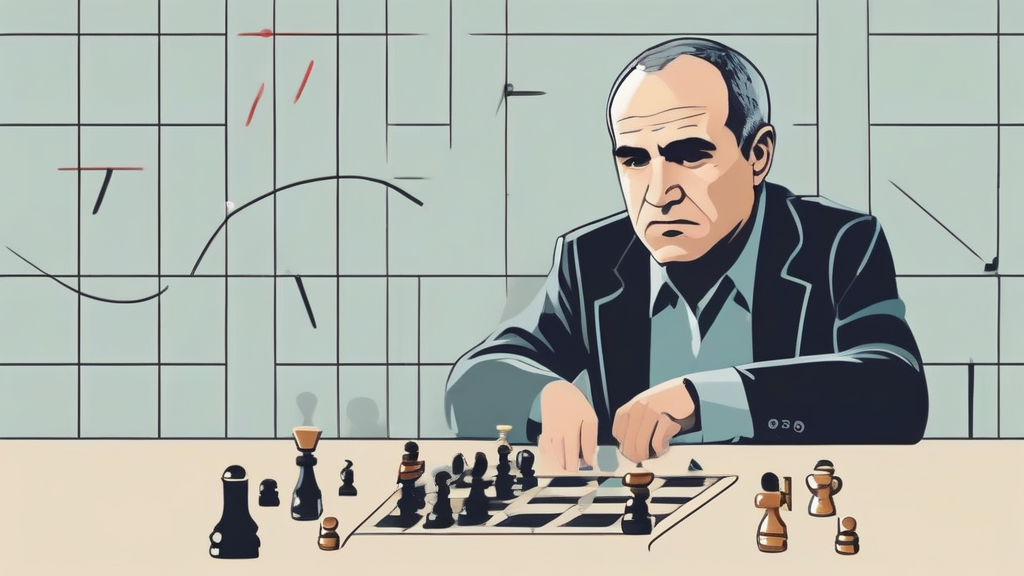
Performing a Deep Blue vs Kasparov game 6 analysis reveals more about human psychology than it does about cold, hard silicon processing power. Garry Kasparov, the reigning World Chess Champion, entered the final round of the 1997 rematch looking like a man who had already lost the war.
Key Insights
- Kasparov opted for the Caro-Kann Defense, a solid choice, but chose an aggressive, untested line.
- The psychological toll of the previous five games had left the champion rattled and uncharacteristically impulsive.
- A single miscalculation at move seven allowed the machine to gain an insurmountable positional advantage.
- The 19-move resignation remains one of the shortest and most shocking capitulations in elite chess history.
Think of the 1997 rematch like a high-stakes poker game where the human player thinks the opponent is using X-ray vision. Kasparov was convinced Deep Blue was receiving human intervention. This paranoia poisoned his decision-making process.
When he played 7...h6, he practically handed the keys to the kingdom to the machine. He ignored standard development principles in favor of a reckless attack. The engine didn't need to be sentient to punish him; it just needed to execute basic tactical refutation.
The tactical collapse of Deep Blue vs Kasparov game 6 analysis
Chess at the world-class level is built on deep preparation and nerves of steel. Kasparov arrived at the board with a shattered ego. He tried to force a complex position where none existed. That is how you lose to a calculator.
| Factor | Impact on Kasparov | Result |
|---|---|---|
| Psychological State | High Anxiety | Impulsive Moves |
| Opening Choice | Unbalanced/Aggressive | Early Exposure |
| Engine Precision | Consistent | Capitalization |
The move 8. e4 was the turning point. Kasparov had to retreat or find a miracle. He found neither. By move 15, his king was trapped in the center while the computer's pieces coordinated with clinical efficiency. Resigning at move 19 was an act of mercy for his own reputation.
He didn't want to suffer a public checkmate. The match result, 3½–2½, changed the perception of machine intelligence forever. We realized then that brute force calculation could overcome human intuition if the human loses their focus for just one moment.
Why did Kasparov lose to Deep Blue?
He lost because he stopped playing the board and started playing the machine. He tried to outsmart a device that was designed specifically to capitalize on human errors, rather than sticking to the objective, principled chess that made him a legend.
Did Woody Harrelson draw against Kasparov?
No. Woody Harrelson played a casual, exhibition-style game against Kasparov during a promotional event, but it was not a professional match. Any claim of a draw in a competitive context is a misunderstanding of a PR appearance.
Was Deep Blue truly artificial intelligence?
By modern standards, no. It was a massive parallel processing system capable of evaluating 200 million positions per second. It relied on specialized hardware and a vast opening database, lacking the machine learning capabilities we see in contemporary neural network engines like AlphaZero.
Mastering your own mental state is just as critical as memorizing opening theory. When you strip away the technology, this match remains a lesson in composure. Stay calm, stick to the fundamentals, and never let the fear of your opponent dictate your opening moves.
Thank you for reading my article carefully, thoroughly, and wisely. I hope you enjoyed it and that you are under the protection of Almighty God. Please leave a comment below.
Post a Comment for "Game 6 Breakdown: Why Kasparov Resigned in Just 19 Moves"