Is Modern Superhuman Chess Killing the Beauty of the Game?
Welcome to my blog theaihistory.blogspot.com, a comprehensive journey chronicling the evolution of Artificial Intelligence, where we will delve into the definitive timeline of AI that has reshaped our technological landscape. History is not just about the distant past; it is the foundation of our future. Here, we will explore the fascinating milestones of machine intelligence, tracing its roots back to the theoretical brilliance of early algorithms and Alan Turing's groundbreaking concepts that first challenged humanity to ask whether machines could think. As we trace decades of historical breakthroughs, computing's dark ages, and glorious renaissance, we will uncover how those early mathematical dreams paved the way for today's complex neural networks. Join us as we delve into this rich historical tapestry, culminating in the transformative modern era of Generative AI, to truly understand how this revolutionary technology has evolved from mere ideas to systems redefining the world we live in. Happy reading..
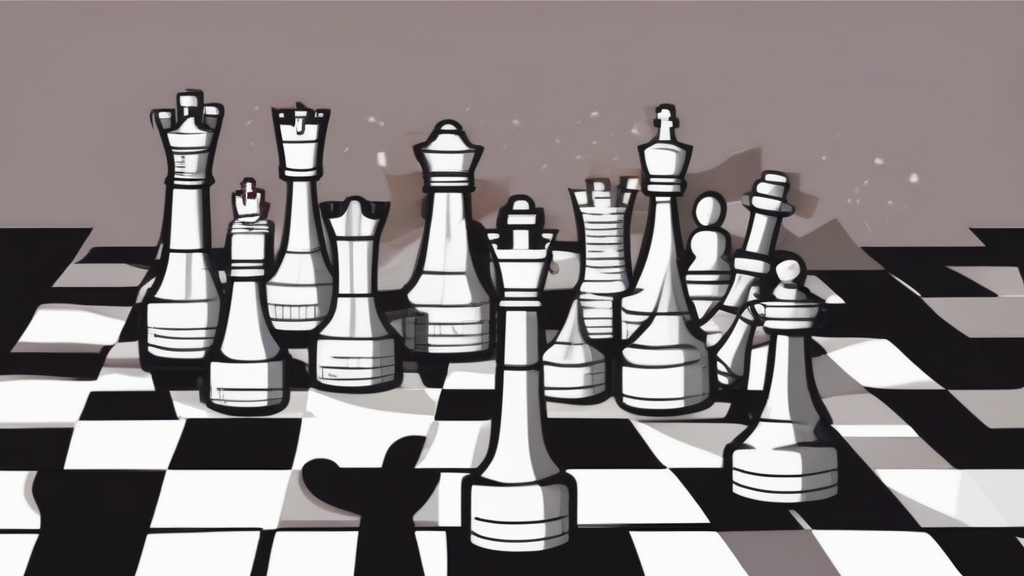
The rapid impact of supercomputers on chess has shifted the landscape from a battle of intuition to a grueling test of memory. We aren't playing the same game anymore. We are playing a game of database recall. It feels less like art and more like assembly-line manufacturing.
Key Insights
- Engine evaluation has turned complex middlegames into predictable, solved paths.
- Human creativity is stifled by the fear of playing a "blunder" identified by Stockfish.
- Modern grandmasters spend more time memorizing opening theory than developing original strategic concepts.
- The gap between amateur performance and elite play is narrowing due to accessible silicon power.
Think of chess engines like a high-powered GPS. You might know the city streets well, but the machine sees every traffic jam and shortcut miles ahead.
You stop looking at the scenery. You just follow the line. That is exactly what is happening to the soul of the grandmaster.
The Impact of Supercomputers on Chess Strategy
Before the digital era, players relied on "chess intuition." This was a gut feeling, a mysterious cocktail of pattern recognition and experience. Today, that intuition is often corrected by a cold, binary assessment of a position.
We’ve reached a point where the opening theory is so deep that games are often decided before the first piece is even developed. Players essentially compete to see who can recall a 30-move sequence from a machine’s analysis.
| Era | Primary Tool | Style of Play |
|---|---|---|
| Pre-1990 | Books & Analysis | Creative, Risk-taking |
| Modern | Neural Networks | Clinical, Precision-based |
Is the Beauty Lost or Just Evolving?
Critics argue that machine dominance ruins the aesthetics. They claim that when a computer finds a "perfect" move, it robs the human of the chance to make a beautiful, albeit slightly flawed, decision.
I disagree. The beauty has simply moved to a higher floor. We are witnessing a level of precision that was historically impossible.
When Magnus Carlsen or Fabiano Caruana finds a resource that even the computer struggles to explain, that is the new peak of art. It’s no longer about who can calculate deeper. It’s about who can understand the computer's logic better.
The Paradox of Modern Preparation
There is a dangerous irony here. As we lean harder into the impact of supercomputers on chess, we risk becoming lazy. If you have the answers, why bother asking the questions?
This creates a barrier for growth. Players who rely solely on engines to tell them "why" a move is bad often fail to develop the internal mechanism needed to navigate positions the engine hasn't processed yet.
Has anyone beaten a supercomputer at chess?
In a standard match under tournament conditions, no human has defeated a top-tier engine in over a decade. The calculation depth of current hardware is simply beyond human biological limits.
What is the 40-40-20 rule in chess?
This is a heuristic suggesting that 40% of your time should be spent on openings, 40% on endgames, and 20% on tactics. However, many pros are now shifting this toward 60% on opening theory due to engine influence.
What happens when two supercomputers play chess?
They usually draw. Because both sides have access to perfect or near-perfect play, the game is frequently exhausted of its tactical complexity until the endgame, resulting in a stalemate of logic.
Don't let the silicon dictate your love for the board. Use the machine as a sparring partner, not a master. Play your own game, find your own beautiful blunders, and keep the human element alive in your next match.
Thank you for reading my article carefully, thoroughly, and wisely. I hope you enjoyed it and that you are under the protection of Almighty God. Please leave a comment below.
Post a Comment for "Is Modern Superhuman Chess Killing the Beauty of the Game?"