Ken Jennings vs Watson: What the Human-AI Duel Taught Us About Strategy
Welcome to my blog theaihistory.blogspot.com, a comprehensive journey chronicling the evolution of Artificial Intelligence, where we will delve into the definitive timeline of AI that has reshaped our technological landscape. History is not just about the distant past; it is the foundation of our future. Here, we will explore the fascinating milestones of machine intelligence, tracing its roots back to the theoretical brilliance of early algorithms and Alan Turing's groundbreaking concepts that first challenged humanity to ask whether machines could think. As we trace decades of historical breakthroughs, computing's dark ages, and glorious renaissance, we will uncover how those early mathematical dreams paved the way for today's complex neural networks. Join us as we delve into this rich historical tapestry, culminating in the transformative modern era of Generative AI, to truly understand how this revolutionary technology has evolved from mere ideas to systems redefining the world we live in. Happy reading..
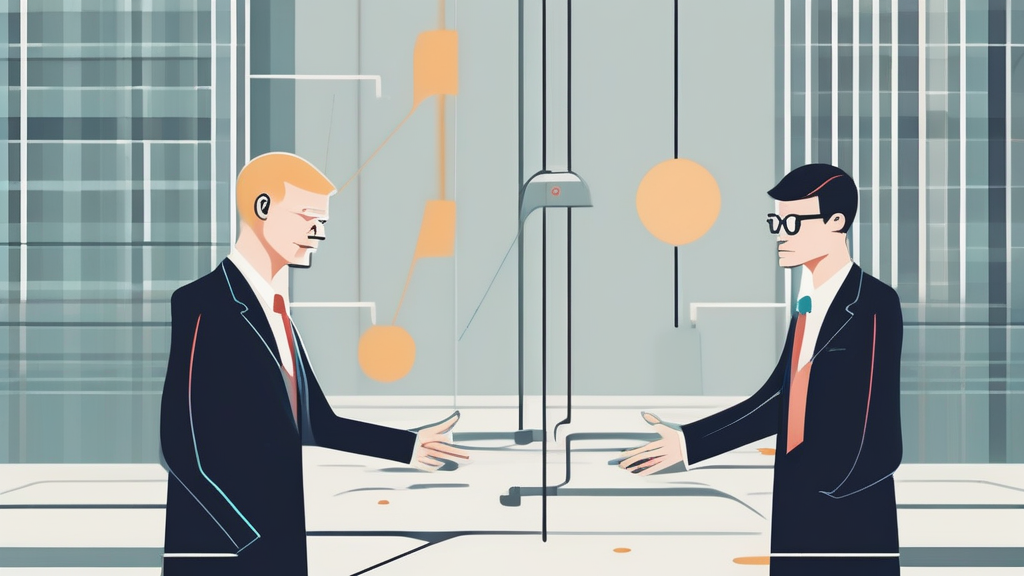
The historic Ken Jennings vs Watson showdown remains the most profound moment in the history of machine learning and human cognition. I watched that match in 2011 with a mix of awe and dread, realizing that the playing field for human intellect had fundamentally shifted.
Key Insights
- Speed isn't just about reflex; it's about the precision of high-speed data retrieval.
- Contextual ambiguity is the final frontier where human intuition still competes with silicon.
- Algorithm-driven decision making often outperforms human risk-taking when the stakes are purely statistical.
- The "buzzer" was the true equalizer, exposing how mechanical reaction time can dismantle even the sharpest Jeopardy! champion.
The Mechanics Behind the Ken Jennings vs Watson Duel
IBM’s Watson wasn't just a search engine. It was a massive cluster of servers designed to interpret the nuance of natural language, including puns and pop culture references. Think of a human brain like a master librarian who knows where every book is hidden. Watson was like a library that teleported the entire shelf into your hand the millisecond you thought of a subject.Why the Buzzer Made the Difference
The human brain is a biological masterpiece, but it’s limited by neurotransmitter speeds. Watson didn’t have to "think" about pushing the button. It was hardwired to pulse the trigger the microsecond its confidence threshold crossed a specific percentage.| Metric | Human (Jennings) | Machine (Watson) |
|---|---|---|
| Knowledge Access | Memory recall/synaptic | Vector-based database search |
| Reaction Time | Biological reflex (~200ms) | Electronic gate (~10ms) |
| Context Handling | High (Nuance/Emotion) | Moderate (Statistical Probability) |
Strategy Lessons from the Machine
We often treat our business strategies like a rigid Jeopardy! board, waiting for the perfect clue to reveal itself. Watson taught us that if your confidence in a data point is high, hesitation is a liability. Don't wait for total certainty. In a volatile market, a 90% accurate decision executed today beats a 100% accurate decision that misses the window of opportunity.What We Learned About AI Limitations
Even in its victory, Watson showed us that machines are fragile when the language shifts outside of expected patterns. It once suggested "Toronto" as an answer for a U.S. Cities category because it failed to account for the geography implied by the context. Machines struggle with the "why" behind the "what." They are masters of the search, but they are not masters of the soul.How did Watson's speed impact the outcome?
Watson’s ability to buzz in faster was not a test of intelligence, but a test of hardware superiority. Because the machine was programmed to calculate confidence scores in real-time, it effectively locked out human players by minimizing the physical lag between recognizing a clue and engaging the switch.Was the Jeopardy match a fair contest?
It was fair in terms of the rules, but inherently unfair in terms of architecture. Humans rely on pattern recognition developed over decades of life experience; machines rely on massive ingestion of static data sets.What does this mean for today’s business owners?
The lesson is simple: stop trying to out-calculate the computer. Focus on the areas where AI fails—empathy, creative synthesis, and ethical decision-making. The machine won the game, but the human remains the architect of the board. Use the technology to handle your data retrieval and focus your energy on the strategy that requires a heartbeat.Thank you for reading my article carefully, thoroughly, and wisely. I hope you enjoyed it and that you are under the protection of Almighty God. Please leave a comment below.
Post a Comment for "Ken Jennings vs Watson: What the Human-AI Duel Taught Us About Strategy"