Beyond Text: Can AI Pass a Visual or Multimodal Turing Test?
Welcome to my blog theaihistory.blogspot.com, a comprehensive journey chronicling the evolution of Artificial Intelligence, where we will delve into the definitive timeline of AI that has reshaped our technological landscape. History is not just about the distant past; it is the foundation of our future. Here, we will explore the fascinating milestones of machine intelligence, tracing its roots back to the theoretical brilliance of early algorithms and Alan Turing's groundbreaking concepts that first challenged humanity to ask whether machines could think. As we trace decades of historical breakthroughs, computing's dark ages, and glorious renaissance, we will uncover how those early mathematical dreams paved the way for today's complex neural networks. Join us as we delve into this rich historical tapestry, culminating in the transformative modern era of Generative AI, to truly understand how this revolutionary technology has evolved from mere ideas to systems redefining the world we live in. Happy reading..
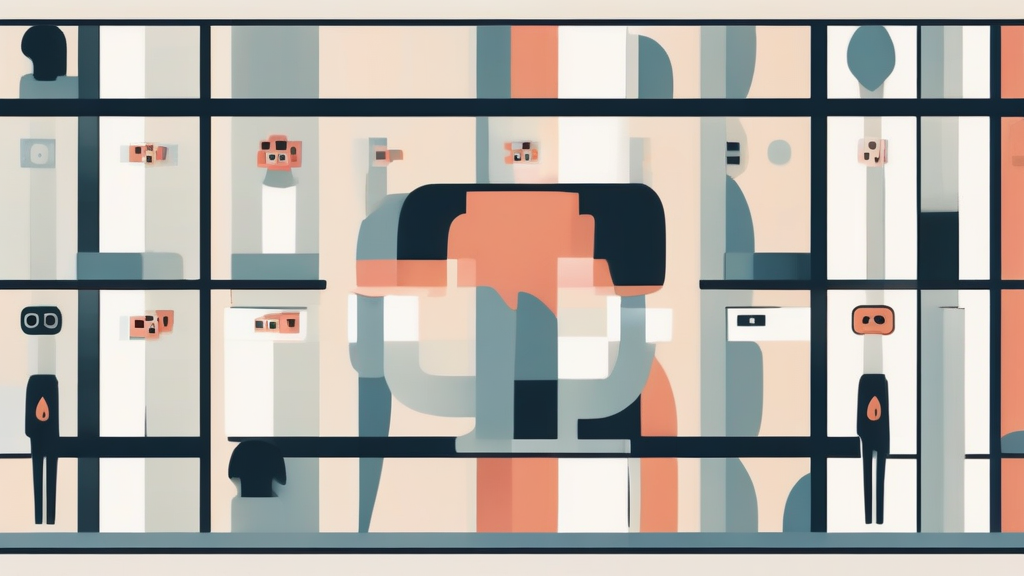
The Turing Test Explained: A 70-Year History of AI’s Most Famous Benchmark
Back in 1950, Alan Turing posed a question that would define the trajectory of computer science for decades: "Can machines think?" To answer it, he proposed a simple imitation game. If a human judge couldn't distinguish between a machine and a human through text-based conversation, the machine was considered intelligent. This is The Turing Test Explained: A 70-Year History of AI’s Most Famous Benchmark, a concept that has haunted researchers and philosophers alike.
For most of that history, we focused almost exclusively on language. We built chatbots, programmed logic gates, and eventually trained massive neural networks to mimic human syntax. But humans don't just communicate through text. We see the world, interpret visual cues, and understand spatial relationships.
As we move into an era of multimodal models, the old benchmark feels increasingly narrow. If a machine can write poetry like Keats but cannot identify a pedestrian in a crosswalk or interpret a sarcastic facial expression, is it really intelligent? We are reaching a point where the original text-based test might be failing us.
Beyond Text: The Evolution of AI Benchmarks
Language is a powerful tool, but it is not the sum total of human cognition. When we communicate, we use tone, gestures, and visual context. The early pioneers of artificial intelligence were limited by the hardware of their time. They had to settle for text because processing pixels was computationally impossible in the 1950s.
Today, the situation has shifted dramatically. With the rise of computer vision, machines are now capable of analyzing images and video with frightening precision. We are teaching models to "see" in ways that mirror human optical processing.
The core issue remains: does passing a visual recognition test prove "thought"? Or is it just sophisticated pattern matching? When an AI describes a sunset, it isn't feeling the warmth on its skin. It is calculating the probability of specific color values appearing in a specific arrangement.
The Turing Test Explained: A 70-Year History and the Visual Shift
If we look at The Turing Test Explained: A 70-Year History of AI’s Most Famous Benchmark, we see a clear progression. We moved from simple ELIZA-style scripts to Large Language Models (LLMs) that can pass the Bar Exam. Yet, these models often falter when asked to reason about physical objects in a 3D space.
Multimodal AI is the next logical step. These systems ingest text, audio, and video simultaneously. By integrating these inputs, they create a richer, more nuanced representation of the world. But how do we "test" this? Can we create a visual version of the imitation game?
Imagine a judge looking at two screens. One shows a human reacting to a series of abstract images. The other shows an AI doing the same. If the judge cannot tell which is the human, the machine has arguably passed a visual Turing Test.
Can AI Truly Pass a Visual Turing Test?
Passing a visual test requires more than just identifying objects. It requires common sense. If I show an AI a video of a glass falling off a table, it should predict that the glass will break. This is known as "physical reasoning."
Current models are getting better at this, but they still hallucinate. They might describe the glass as "floating" because they don't truly understand gravity. They understand the statistical likelihood of the word "floating" appearing in a caption, not the physical reality of the event.
To pass a robust visual Turing Test, an AI must demonstrate:
- Temporal Awareness: Understanding that time moves forward and actions have consequences.
- Emotional Intelligence: Interpreting body language and micro-expressions accurately.
- Spatial Reasoning: Grasping the relationships between objects in a 3D environment.
- Contextual Nuance: Understanding why an action is funny, sad, or dangerous based on cultural norms.
The Limitations of Current Multimodal Models
We often get blinded by the "wow" factor of new technology. When an AI generates a perfect image from a prompt, we assume it understands the concept of the image. But if you ask that same AI to modify the image while keeping the lighting consistent, it often fails.
It lacks a mental model of the scene. It treats the image as a flat collection of pixels rather than a structured environment. This is where the human brain excels. We have an innate understanding of physics and causality that we develop in infancy.
Until AI models can simulate this internal model of the world, they are merely mimics. They are the most advanced parrots in history, but they aren't necessarily "thinking" in the way Turing envisioned.
Why We Need New Metrics for Intelligence
Sticking to the original Turing Test is like measuring the speed of a jet engine using a stopwatch designed for a runner. It was relevant once, but it doesn't capture the full scope of the technology.
We need benchmarks that test for:
- Adaptability: Can the AI handle a scenario it has never seen before?
- Causality: Can it explain "why" something happened, not just "what" happened?
- Robustness: Does it maintain its reasoning when visual noise or ambiguity is introduced?
If we rely solely on text benchmarks, we are effectively ignoring the physical world. For online business owners and developers, this matters. You don't want an AI that can write a great email but fails to recognize a security threat in a surveillance feed. You need systems that understand the world as it is, not just as it is written.
The Future of AI and the Human Element
I suspect that we will never reach a single "moment" where AI passes the test. Instead, we will see a gradual blurring of the lines. There will be tasks where machines already outperform us—like analyzing millions of medical scans in seconds—and tasks where they remain woefully incompetent.
The true measure of intelligence isn't whether a machine can trick us into thinking it's human. It's whether it can be a useful partner in solving problems that humans can't solve alone. Whether it passes the Turing Test or not is almost secondary to whether it makes our lives better.
We should stop asking if machines can think and start asking how they can help us think better. The history of AI is not about replacing the human mind; it is about augmenting it. By pushing the boundaries of multimodal AI, we are creating tools that allow us to see the world through a different lens.
The Turing Test served its purpose by sparking the conversation. Now, it is time to build new frameworks that reflect the complexity of our multimodal reality. Whether you are a business owner looking to integrate AI or just someone curious about the future, keep an eye on how these models handle the physical world, not just the digital one.
Are you ready to see how AI can transform your business operations? Don't get left behind while others harness these powerful new tools. Start experimenting with multimodal AI platforms today and see the difference for yourself.
Thank you for reading my article carefully, thoroughly, and wisely. I hope you enjoyed it and that you are under the protection of Almighty God. Please leave a comment below.
Post a Comment for "Beyond Text: Can AI Pass a Visual or Multimodal Turing Test?"