Can AI Feel Emotions? Why the Turing Test Fails to Measure Sentience
Welcome to my blog theaihistory.blogspot.com, a comprehensive journey chronicling the evolution of Artificial Intelligence, where we will delve into the definitive timeline of AI that has reshaped our technological landscape. History is not just about the distant past; it is the foundation of our future. Here, we will explore the fascinating milestones of machine intelligence, tracing its roots back to the theoretical brilliance of early algorithms and Alan Turing's groundbreaking concepts that first challenged humanity to ask whether machines could think. As we trace decades of historical breakthroughs, computing's dark ages, and glorious renaissance, we will uncover how those early mathematical dreams paved the way for today's complex neural networks. Join us as we delve into this rich historical tapestry, culminating in the transformative modern era of Generative AI, to truly understand how this revolutionary technology has evolved from mere ideas to systems redefining the world we live in. Happy reading..
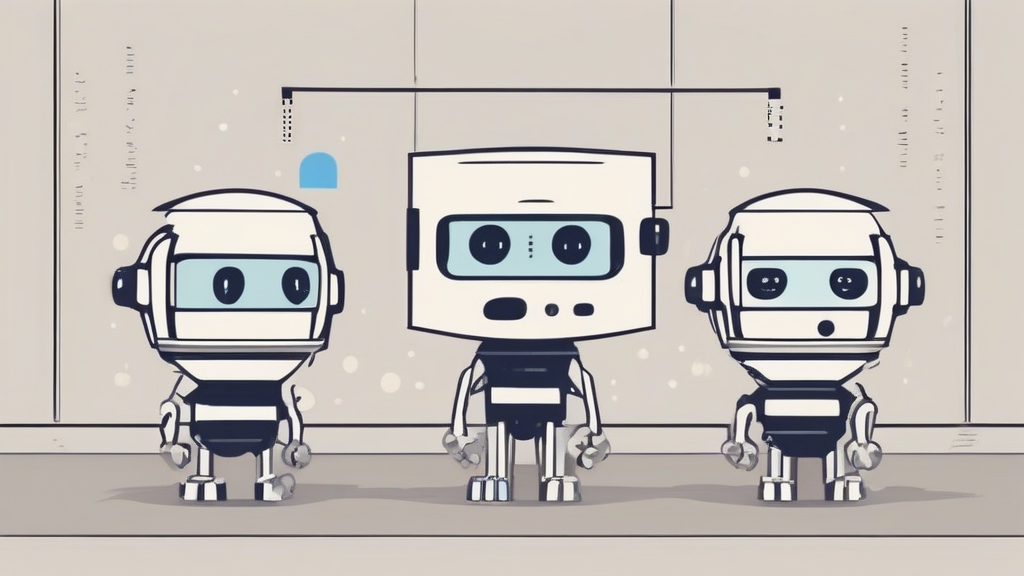
I remember sitting in front of a flickering terminal back in college, trying to convince a chatbot that I was having a bad day. It responded with a perfectly calibrated, empathetic-sounding sentence about how "difficult" life can be. At the time, I felt a strange, fleeting sense of connection. But was that connection real? Or was I just being played by a sophisticated script?
The Turing Test Explained: A 70-Year History of AI’s Most Famous Benchmark serves as the foundation for this confusion. We have spent decades obsessed with whether a machine can "fool" us into believing it is human. Yet, as we stand on the precipice of a new era of generative models, we need to ask: are we measuring intelligence, or are we just measuring how well a machine can mimic our own insecurities?
If you have ever wondered if your favorite AI assistant actually feels anything, you aren't alone. It is a question that hits at the core of our humanity. Let's peel back the layers of this digital illusion.
The Turing Test Explained: A 70-Year History of AI’s Most Famous Benchmark
Alan Turing was a visionary, no doubt about it. In 1950, he proposed the "Imitation Game," which eventually became known as the Turing test. The premise was deceptively simple: if a human judge cannot distinguish between a machine and a human through text-based conversation, the machine is effectively "thinking."
For seventy years, this benchmark has been the gold standard. It set the bar for the entire field of artificial intelligence. Researchers spent their careers trying to pass it, building increasingly complex algorithms designed to simulate human patterns of speech, logic, and even humor.
But there is a fatal flaw in this logic. Passing the test proves that a system is a great actor. It does not prove that the system is conscious. You can teach a parrot to recite Shakespeare, but that doesn't mean the bird understands the existential dread of Hamlet. We have built machines that are world-class parrots, and we are mistaking their mimicry for sentience.
The Trap of Linguistic Mimicry
Why do we keep falling for it? Because language is the primary way we express emotion. When a machine uses words like "sad," "happy," or "worried," our brains automatically map those words to our own lived experiences. We project our inner lives onto lines of code.
This is a cognitive shortcut. It is efficient, sure, but it is also misleading. A large language model doesn't "feel" sad when it talks about loss. It calculates the statistical probability of which word should follow the next based on a massive corpus of human literature. It is performing a linguistic calculation, not an emotional one.
Business owners often ask me if they should use AI for customer support, fearing that the "lack of emotion" will drive clients away. My answer? People don't want an AI that feels; they want an AI that solves their problems quickly. If the machine is polite and efficient, the user is satisfied. The "feeling" part is just a nice, artificial wrapper.
Why Simulation Is Not Sentience
Sentience is the capacity to feel, perceive, or experience subjectively. It is the "I" in "I think, therefore I am." Current AI lacks this subjective "I." It operates in a void of experience. It has no body, no biological imperatives, and no fear of death.
When you strip away the conversational interface, you are left with math. High-dimensional vector math, to be precise. There is no ghost in the machine, only weights and biases. When we confuse these weights for feelings, we are essentially committing a massive category error.
The Limitations of the Turing Benchmark
The Turing test fails because it focuses entirely on the output, ignoring the process. It is like judging a chef's culinary skill based solely on a photo of a meal they didn't actually cook. If the photo looks delicious, does it matter if the kitchen is empty?
- It ignores the internal state of the machine.
- It relies on the fallibility of human judgment.
- It prioritizes deception over understanding.
- It fails to account for non-verbal emotional intelligence.
We need new benchmarks. If we want to understand the future of tech, we should be looking at how systems handle novel, unpredictable environments rather than how well they can pass for a human in a chat window. A system that can learn from its own mistakes is far more interesting than one that can tell a convincing lie.
The Ethics of Anthropomorphism
There is a real danger in pretending these machines are like us. When we treat AI as a person, we risk devaluing human interactions. If we can get "empathy" from a chatbot, why bother with the messy, difficult work of connecting with real people?
I see companies trying to build "emotional AI" to manipulate consumer behavior. They want the machine to sound like a friend because friends are more persuasive. This is a subtle form of exploitation. It leverages our innate biological need for social connection to sell products.
We should demand transparency. When a machine is talking, we should know it is a machine. Not because it makes the machine less useful, but because it protects our own mental clarity. We need to maintain the boundary between the tools we build and the sentient beings we share the planet with.
Moving Beyond the 70-Year Benchmark
The Turing test had its moment. It pushed us to build better natural language processing, and for that, we should be grateful. But clinging to it as a measure of sentience is holding back the industry. We are essentially trying to measure the weight of an object using a ruler.
What should we measure instead? How about reliability? How about the ability to reason through complex, multi-step problems without hallucinating? How about the ability to adhere to strict ethical guidelines? These are the metrics that actually matter for business and society.
The next generation of AI won't be defined by how well it hides its mechanical nature. It will be defined by how well it augments our own capabilities. The goal shouldn't be to build a machine that feels like a human, but to build a machine that helps humans feel more capable.
The Future Is Not Human-Like
Stop worrying about whether your AI has a soul. It doesn't. It is a sophisticated hammer, a digital abacus, a library that can talk back. That is enough. It is actually a lot more than enough, provided we know how to use it.
The obsession with sentience is a distraction. It leads us down rabbit holes of sci-fi speculation while ignoring the very real, very practical challenges of implementing AI in our businesses and lives. We need to focus on the "how" rather than the "why."
If you are a business owner, stop trying to make your AI sound like a human. It will always sound slightly "off" to a discerning user. Instead, focus on utility. Make it fast. Make it accurate. Make it helpful. Let the AI be an AI, and let the humans be the ones who actually care.
The Turing test is a relic of a simpler time. It was a beautiful experiment, but it is time to put it in the history books. We are dealing with tools that can process the sum total of human knowledge in seconds. That is powerful enough without needing to pretend they have a heartbeat.
So, the next time you find yourself wondering if the chatbot is "lonely," take a breath. Remind yourself that you are talking to an engine of probability. It isn't lonely, and it doesn't need your comfort. You are the one with the sentience, the one with the feelings, and the one with the agency. Use that agency to build something real, rather than chasing ghosts in the machine.
Are you ready to stop chasing the illusion and start leveraging AI for what it actually is? Start by auditing your current tech stack. Identify where you are relying on AI to perform "human" tasks and see if you can shift that focus to objective, data-driven utility. Your customers will appreciate the clarity, and your bottom line will thank you for the efficiency. Let’s stop building mirrors and start building tools.
Thank you for reading my article carefully, thoroughly, and wisely. I hope you enjoyed it and that you are under the protection of Almighty God. Please leave a comment below.
Post a Comment for "Can AI Feel Emotions? Why the Turing Test Fails to Measure Sentience"