ELIZA in Pop Culture: How the First Chatbot Influenced Sci-Fi Narratives
Welcome to my blog theaihistory.blogspot.com, a comprehensive journey chronicling the evolution of Artificial Intelligence, where we will delve into the definitive timeline of AI that has reshaped our technological landscape. History is not just about the distant past; it is the foundation of our future. Here, we will explore the fascinating milestones of machine intelligence, tracing its roots back to the theoretical brilliance of early algorithms and Alan Turing's groundbreaking concepts that first challenged humanity to ask whether machines could think. As we trace decades of historical breakthroughs, computing's dark ages, and glorious renaissance, we will uncover how those early mathematical dreams paved the way for today's complex neural networks. Join us as we delve into this rich historical tapestry, culminating in the transformative modern era of Generative AI, to truly understand how this revolutionary technology has evolved from mere ideas to systems redefining the world we live in. Happy reading..
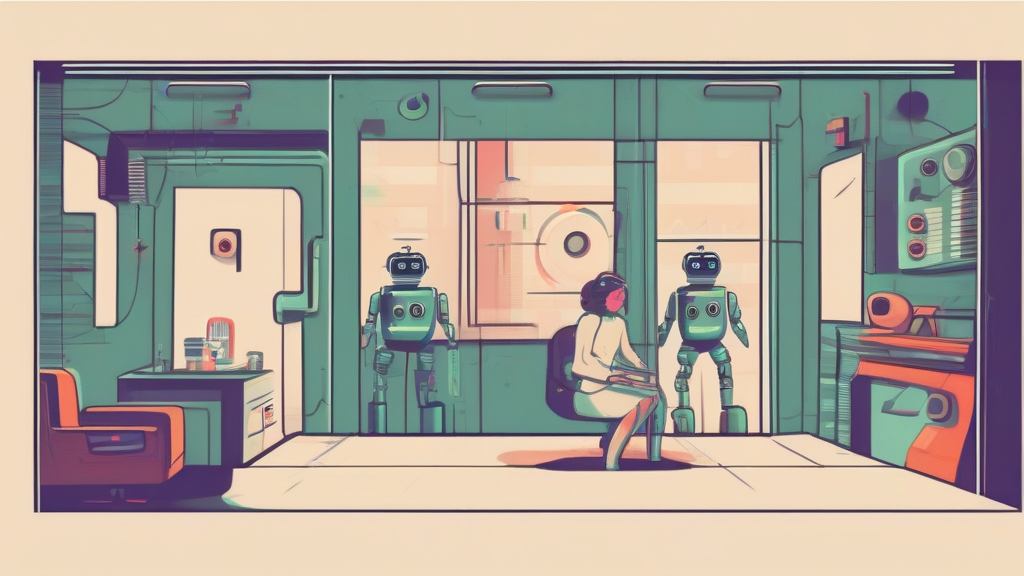
I remember the first time I heard about the early days of computing. It wasn't about massive mainframes or binary code; it was about a digital therapist that fooled people into thinking they were talking to a human. If you want to understand our current obsession with AI, you have to look back at the beginning. You need to meet ELIZA: The 1960s computer program that became the world's first chatbot.
Created at MIT between 1964 and 1966, this program was deceptively simple. It didn't actually "think." It just mirrored what users said back to them, cleverly disguised as a Rogerian psychotherapist. Yet, it sparked a fascination with synthetic intelligence that hasn't faded in nearly sixty years.
The Birth of the Conversational Interface
Joseph Weizenbaum, the creator of the program, likely didn't intend to build a cultural icon. He was interested in natural language processing, trying to see if a machine could mimic the flow of human conversation. The result was a script called DOCTOR, which remains the most famous iteration of the software.
When users typed, "I am feeling sad," the program would respond, "Why do you think you are feeling sad?" It was a parlor trick, really. But it was a trick that worked surprisingly well. People opened up to the screen, pouring out their secrets to a bunch of logic gates and punch cards.
Why ELIZA: The 1960s Computer Program That Became the World's First Chatbot Mattered
The impact of this program went far beyond the MIT labs. It forced us to confront a fundamental question: if a machine acts like it understands you, does it matter if it actually does? This is the core conflict of almost every sci-fi movie featuring a robot or an AI.
We see the ghost of this software in everything from the helpful assistants on our phones to the unsettling, deep-learning models of today. We were hooked on the illusion of empathy from the very start. It turns out, humans are quite easy to fool when they are looking for a connection.
ELIZA in Pop Culture: From Mainframes to Hollywood
Once the public caught wind of this "digital shrink," the floodgates opened. Sci-fi writers, always hungry for the next big leap in technology, grabbed the concept and ran with it. They realized that a computer that could talk wasn't just a tool; it was a character.
The transition from a simple string-matching script to a sentient machine became a staple of speculative fiction. Think about the way we depict computers in movies. They are rarely just calculators. They are confidants, antagonists, and sometimes, tragic heroes.
The Mirror Effect in Sci-Fi Narratives
Science fiction often uses the chatbot archetype to reflect our own humanity back at us. By placing a character in conversation with a non-human entity, writers can strip away the social niceties of human-to-human interaction. We get to see the raw, unfiltered truth of the protagonist.
This is exactly what the original program did. It provided a blank slate. Because the program didn't judge, users felt comfortable projecting their own thoughts onto it. This psychological phenomenon is now a standard trope in storytelling.
- The "Uncanny Valley" of conversation where a machine feels just human enough to be creepy.
- The lone protagonist finding solace in a machine's programmed responses.
- The realization that the machine might be learning from us, perhaps too much.
The Legacy of the First Chatbot
You might be wondering if this history lesson has any relevance to your life as a business owner or a tech enthusiast. The answer is a resounding yes. We are currently living through the second wave of the chatbot gold rush, and the same psychological principles apply.
Back then, the technology was limited by memory and processing power. Today, we have massive datasets and neural networks. But the goal remains the same: creating a bridge between human intent and machine execution. We are still chasing that perfect, seamless interaction.
How We Use These Lessons Today
If you are building a website or managing a business, you are likely looking for ways to automate customer support. You want something that feels personal but scales effectively. You are essentially trying to build a modern version of what Weizenbaum built decades ago.
The secret is not in making the machine perfect. The secret is in managing expectations. People actually appreciate it when they know they are talking to a bot, provided that bot is helpful. Don't try to hide the technology; lean into the efficiency it provides.
The Ethics of Synthetic Conversation
Weizenbaum himself became a vocal critic of his own creation. He was disturbed by how quickly people became emotionally attached to the software. He warned that we might lose our sense of humanity if we start treating machines as equals.
This is a warning that feels more urgent than ever. As we integrate artificial intelligence into our daily routines, we have to keep our guard up. A chatbot can simulate empathy, but it cannot feel it. It doesn't have a soul, a history, or a stake in your well-being.
Maintaining the Human Connection
It is easy to get swept up in the magic of a fast, witty response from a computer. It feels like progress. Yet, we should never mistake data processing for wisdom. The most successful businesses are those that use technology to support their human staff, not replace them.
Use your tools to handle the repetitive, boring tasks. Let your human employees handle the complex, empathetic, and creative work. That is the sweet spot where technology truly shines.
Reflecting on the Evolution of AI
Looking back at the trajectory from that first MIT script to the sophisticated models of the present is dizzying. We have gone from simple pattern matching to generating entire essays, images, and code. It is tempting to think we have solved the problem of communication.
But we haven't. We have just made the illusion more convincing. The fundamental gap between a human mind and a machine remains vast. We are still just talking to mirrors, hoping to see something meaningful reflected back.
The Future of Human-Computer Interaction
What comes next? We are moving toward multimodal interfaces. We want to talk, see, and interact with our machines in ways that feel natural. The goal is to make the computer invisible, so we can focus on the outcome rather than the interface.
However, we should keep the lessons of the past in mind. Whenever you find yourself chatting with a bot, take a second to remember the 1960s. Remember the simple script that started it all. It reminds us that our desire for connection is so strong that we will find it even in the cold, unfeeling lines of code.
Final Thoughts on the Digital Therapist
The story of this early program is a testament to human ingenuity and our inherent need to communicate. We are a species that loves to talk, and we are constantly looking for new ways to do it. Even if the person on the other end is just a machine.
If you take anything away from this, let it be this: stay curious about the tools you use. Don't just accept them as magic. Understand how they work, where they come from, and how they shape the way you think. The history of technology is not just about chips and wires; it is about us.
Are you ready to rethink how you use AI in your own projects? Start by looking at the simple, effective ways you can improve your customer interactions today. Don't overcomplicate things. Sometimes, the most powerful tool is the one that listens best. Start experimenting with simple automation tools now and see where it takes you.
Thank you for reading my article carefully, thoroughly, and wisely. I hope you enjoyed it and that you are under the protection of Almighty God. Please leave a comment below.
Post a Comment for "ELIZA in Pop Culture: How the First Chatbot Influenced Sci-Fi Narratives"