How to Build a Simple Turing Test Chatbot: A Python Tutorial
Welcome to my blog theaihistory.blogspot.com, a comprehensive journey chronicling the evolution of Artificial Intelligence, where we will delve into the definitive timeline of AI that has reshaped our technological landscape. History is not just about the distant past; it is the foundation of our future. Here, we will explore the fascinating milestones of machine intelligence, tracing its roots back to the theoretical brilliance of early algorithms and Alan Turing's groundbreaking concepts that first challenged humanity to ask whether machines could think. As we trace decades of historical breakthroughs, computing's dark ages, and glorious renaissance, we will uncover how those early mathematical dreams paved the way for today's complex neural networks. Join us as we delve into this rich historical tapestry, culminating in the transformative modern era of Generative AI, to truly understand how this revolutionary technology has evolved from mere ideas to systems redefining the world we live in. Happy reading..
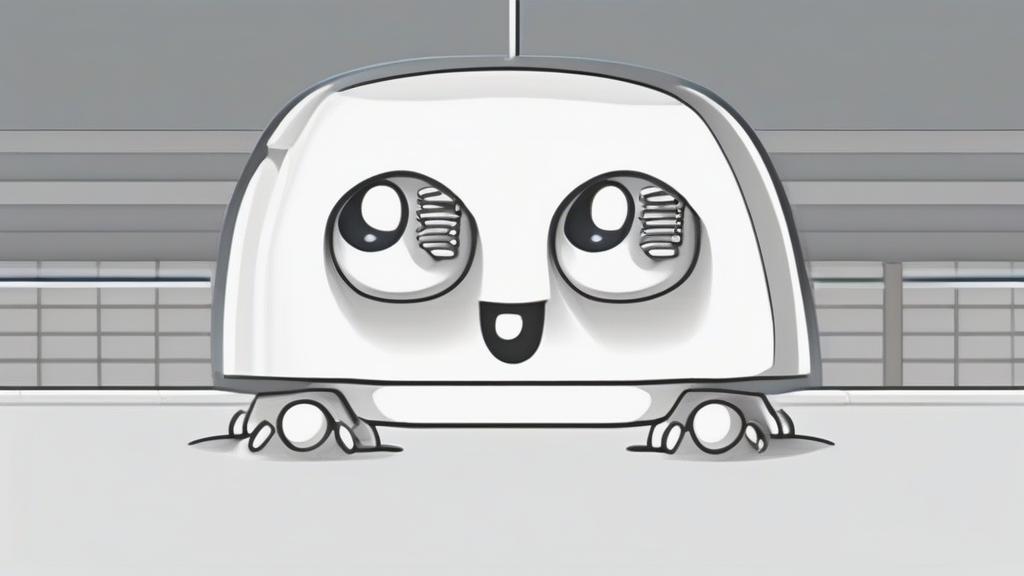
The Turing Test Explained: A 70-Year History of AI’s Most Famous Benchmark
Back in 1950, a visionary mathematician named Alan Turing proposed a simple yet profound question: Can machines think? He devised an imitation game that would eventually become the gold standard for evaluating machine intelligence.
To understand the weight of this challenge, we have to look back at the origins of the Turing Test. It wasn't just a technical hurdle; it was a philosophical inquiry that forced humanity to define what "thinking" actually means. For seven decades, researchers have been chasing the ghost of human-like conversation, trying to bridge the gap between cold silicon and warm, messy human logic.
The Turing Test Explained: A 70-Year History of AI’s Most Famous Benchmark shows us that the goalpost keeps moving. What seemed like magic in the 1960s is now just standard procedural code. Yet, the allure of building a bot that can fool a human remains one of the most exciting projects for any developer.
Setting Up Your Python Environment
You don't need a supercomputer or a PhD in linguistics to build a basic conversational agent. Python is the perfect language for this because of its readability and the massive ecosystem of libraries available at your fingertips.
First, make sure you have Python installed on your machine. I recommend using a virtual environment to keep your workspace clean. Open your terminal or command prompt and run these commands:
- mkdir turing-bot
- cd turing-bot
- python -m venv venv
- source venv/bin/activate (or venvScriptsactivate on Windows)
Once your environment is active, you are ready to start coding. We will stick to standard libraries for this project so you don't have to worry about complex dependencies. We want to focus on the logic of conversation rather than the complexity of neural networks.
Understanding the Mechanics of Conversation
At its core, a chatbot is essentially a decision tree wrapped in a loop. It takes user input, processes it, and spits out a response based on predefined rules or patterns. While modern large language models use massive datasets, the original spirit of the test was about the ability to deceive.
To build a simple bot, we need a way to store "knowledge." A dictionary in Python acts as a perfect lookup table. If the user says "hello," the bot should know to say "hi" back. It’s simple, but it’s the foundation of all Artificial Intelligence.
Building Your First Chatbot
Let's write some code. Create a file named bot.py and open it in your favorite text editor. We will start with a basic structure that listens for input and provides a static response.
def respond(user_input):
    responses = {
        "hello": "Hi there! How are you feeling today?",
        "how are you": "I am just a bunch of code, but I'm functioning perfectly!",
        "what is your name": "I am the Turing Bot 1.0."
    }
    return responses.get(user_input.lower(), "That's interesting. Tell me more.")

def main():
    print("Chatbot: Hello! Type 'quit' to exit.")
    while True:
        user_input = input("You: ")
        if user_input.lower() == 'quit':
            break
        print("Chatbot:", respond(user_input))

if __name__ == "__main__":
    main()
Run this script by typing python bot.py in your terminal. You now have a working conversational interface. It isn't going to win any awards for intelligence, but it follows the basic flow of a human interaction.
Refining the Logic for Better Deception
To make the bot feel more "human," we need to add a bit of randomness. A machine that responds exactly the same way every time is easily spotted. We can use the random library to shuffle through a list of potential responses.
Consider adding a "catch-all" function that parses specific keywords. If the user mentions "weather," the bot should pivot the conversation. This gives the illusion of understanding context, which is key to passing a simplified version of the test.
Challenges in Replicating Human Thought
Why is this so hard? Humans are unpredictable. We use sarcasm, slang, and non-sequiturs that break most rigid logic structures. When you look at the Turing Test Explained: A 70-Year History of AI’s Most Famous Benchmark, you realize the biggest hurdle isn't computing power—it's nuance.
If you ask a human "What is the capital of France?", they answer "Paris." If you ask them "Why does the moon look so lonely tonight?", they might talk about their childhood or a song they heard. A chatbot usually struggles with that second question because it lacks a lived experience.
To improve your bot, consider these three areas of focus:
- Context tracking: Keep a history of the last three things the user said.
- Sentiment analysis: Detect if the user is angry or happy and change the tone of your responses accordingly.
- Fallback mechanisms: When the bot is truly stumped, use a polite phrase to steer the conversation back to a topic it knows.
Testing Your Creation
Now that you have a functioning bot, it's time to put it to the test. Ask a friend to chat with it without telling them it's just a simple Python script. You will quickly notice where the cracks appear.
Perhaps the bot repeats itself too often. Maybe it fails to recognize when a user is changing the subject. These failures are not signs that you are a bad programmer. They are exactly the kinds of problems that researchers have been solving for decades.
Take notes on these interactions. What made your friend realize they were talking to a machine? Was it the robotic phrasing? The lack of emotional intelligence? Use that feedback to update your dictionary of responses.
The Future of Conversational AI
We are living in an era where the line between human and machine is blurring faster than ever. While my little Python script is a far cry from a sentient being, the underlying principles remain the same. We are trying to map the messy, beautiful structure of human language into something a machine can process.
The Turing Test is no longer just about passing; it’s about how we interact with technology. Whether you are a business owner looking to automate customer support or a hobbyist playing with code, the ability to build a conversational agent is a skill that will only grow in value.
Keep experimenting with your code. Add more complex logic, integrate external APIs to fetch real-time data, or even link it to a simple database to store user preferences. Every small addition brings you one step closer to creating a bot that feels truly alive.
If you found this tutorial helpful, start building your own version today. Don't worry about being perfect—just focus on the conversation. The journey of building AI is just as important as the destination.
Thank you for reading my article carefully, thoroughly, and wisely. I hope you enjoyed it and that you are under the protection of Almighty God. Please leave a comment below.
Post a Comment for "How to Build a Simple Turing Test Chatbot: A Python Tutorial"