How to Conduct a Turing Test for Your Own Customer Service AI
Welcome to my blog theaihistory.blogspot.com, a comprehensive journey chronicling the evolution of Artificial Intelligence, where we will delve into the definitive timeline of AI that has reshaped our technological landscape. History is not just about the distant past; it is the foundation of our future. Here, we will explore the fascinating milestones of machine intelligence, tracing its roots back to the theoretical brilliance of early algorithms and Alan Turing's groundbreaking concepts that first challenged humanity to ask whether machines could think. As we trace decades of historical breakthroughs, computing's dark ages, and glorious renaissance, we will uncover how those early mathematical dreams paved the way for today's complex neural networks. Join us as we delve into this rich historical tapestry, culminating in the transformative modern era of Generative AI, to truly understand how this revolutionary technology has evolved from mere ideas to systems redefining the world we live in. Happy reading..
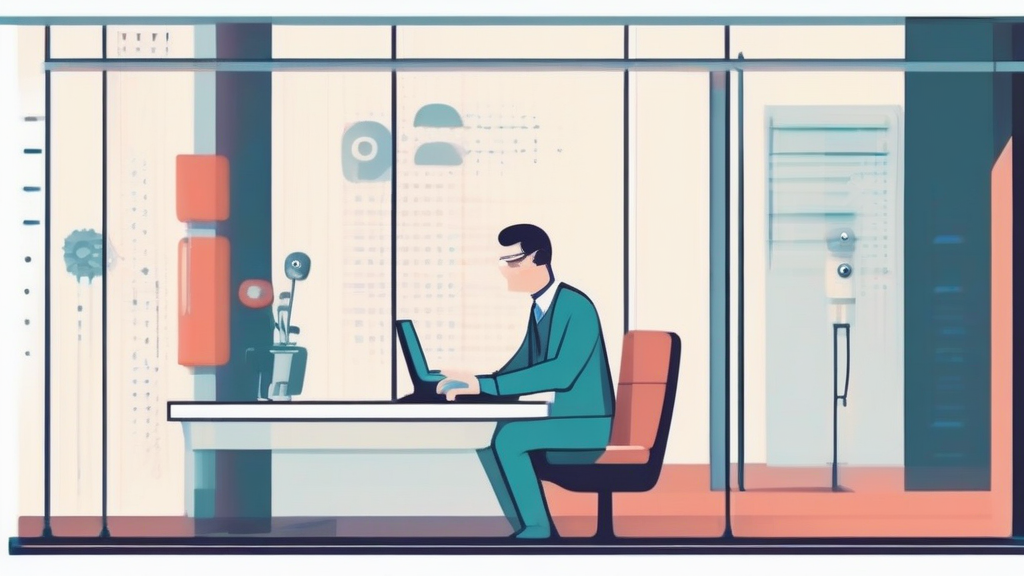
Ever find yourself chatting with a support bot that feels more like a brick wall than a helpful assistant? We have all been there. As business owners, we want our automated systems to handle queries efficiently, but we also want them to sound like, well, a person. Before you roll out your next update, you might want to look back at the origins of machine intelligence. The Turing Test Explained: A 70-Year History of AI’s Most Famous Benchmark provides the perfect foundation for evaluating whether your software truly understands the nuance of human interaction.
I remember the first time I tried to automate my own customer service line. I was so excited about the efficiency, but the feedback was brutal. Customers didn't want speed if it meant talking to a script that couldn't grasp a simple joke or a complex frustration. That experience taught me that the goal isn't just to answer questions—it’s to build a connection. Let’s break down how you can adapt this classic evaluation method for your own digital workspace.
Understanding the Turing Test Explained: A 70-Year History of AI’s Most Famous Benchmark
Alan Turing was a visionary. Back in 1950, he proposed a simple game. If a human evaluator couldn't distinguish between a machine and a human through text-based conversation, the machine was said to have passed the test. It sounds straightforward, right? But the implications for modern business are massive.
For decades, this benchmark has been the gold standard for artificial intelligence. It isn't just about logic or speed. It is about the ability to mimic human unpredictability, sarcasm, and empathy. When you look at the history of this test, you see a shift from simple rule-based systems to the sophisticated Large Language Models we use today.
Why Business Owners Should Care About the Turing Test
You might ask, "Why do I need my bot to pass a test designed for researchers?" The answer is simple: trust. When a customer feels like they are being heard, their loyalty increases. When they feel like they are shouting into a void of pre-programmed errors, they leave.
Conducting your own version of this test helps you identify the "uncanny valley"—that uncomfortable space where a bot is almost human, but just off enough to be creepy or annoying. By testing your AI, you aren't just checking for accuracy; you are refining the personality of your brand.
Setting Up Your Own Evaluation Framework
You don't need a PhD in computer science to run a test. You just need a systematic approach. Start by creating a set of scenarios that mimic real-life support tickets. These should include the mundane, the angry, and the downright bizarre.
Here is how to structure your internal testing process:
- The Blind Test: Have a team member chat with the AI without knowing if it's the bot or a human support rep.
- The Emotional Stress Test: Throw in questions that require empathy or nuanced understanding.
- The Contextual Challenge: Ask questions that refer back to previous parts of the conversation to see if the AI maintains memory.
Designing the Conversation Scenarios
Don't just ask about return policies. Test the limits. Ask your AI to explain a policy, then pretend to be frustrated, and finally ask for an exception. A human rep would know how to pivot and de-escalate. Does your AI? If the bot sticks to a rigid script, it fails the "humanity" test.
I like to include "off-topic" prompts. Ask the bot what it thinks about the weather or a local sports team. If it responds with a robotic "I am an AI and cannot discuss sports," it breaks the illusion immediately. A better response might be a polite, conversational deflection that keeps the user engaged.
Analyzing the Results of Your AI Benchmarks
Once you have gathered your data, look for patterns. Where does the AI stumble? Is it the tone? The speed? The lack of context? Most of the time, the failure point is in the transition between technical information and empathetic acknowledgment.
If your AI is technically perfect but emotionally cold, you have a design problem. You need to adjust the system prompts to allow for more conversational fillers, natural pauses, and varied sentence structures. Remember, humans don't speak in perfect, grammatically flawless paragraphs all the time.
Refining Your Bot Based on Real-World Interaction
Iteration is your best friend. Take the logs from your testing sessions and feed them back into your training data. If your testers felt the AI was too stiff, dial up the "personality" settings. If they felt it was too informal, rein it in.
Keep in mind that the goal isn't to trick the user into thinking the bot is a real person forever. The goal is to make the experience seamless enough that the user doesn't feel the need to demand a human agent immediately. If you can bridge that gap, you save time and keep your customers happy.
Common Pitfalls to Avoid During Testing
One of the biggest mistakes I see is over-engineering the bot. When you try to make an AI "too human," it often ends up sounding sarcastic or fake. Keep it professional but approachable. You want a helpful assistant, not a chatty neighbor who talks your ear off.
Another pitfall is ignoring the technical limitations. If your AI is hallucinating facts, no amount of "human-like" personality will save the sale. Always prioritize accuracy first, then layer the personality on top. A bot that sounds like a friend but gives the wrong refund amount is a liability, not an asset.
Final Thoughts on AI Benchmarking
The history of the Turing test is a reminder that we are constantly trying to bridge the gap between silicon and soul. As you implement these tests for your own customer service systems, keep the human element at the center of your strategy. Your AI should serve your customers, not just simulate them.
Take the time to run these tests quarterly. Technology changes, and so do customer expectations. By staying proactive and treating your AI like a growing member of your team, you will build a support system that actually supports your business goals. So, go ahead—start testing today. You might be surprised by how much your bot can learn from a little bit of scrutiny.
Ready to see if your AI measures up? Grab a notepad, draft those test scenarios, and start chatting. Your customers will thank you for the extra effort when they finally get the smooth, human-like support they deserve.
Thank you for reading my article carefully, thoroughly, and wisely. I hope you enjoyed it and that you are under the protection of Almighty God. Please leave a comment below.
Post a Comment for "How to Conduct a Turing Test for Your Own Customer Service AI"