The Ethical Controversy of Early AI: Weizenbaum's Regret Explained
Welcome to my blog theaihistory.blogspot.com, a comprehensive journey chronicling the evolution of Artificial Intelligence, where we will delve into the definitive timeline of AI that has reshaped our technological landscape. History is not just about the distant past; it is the foundation of our future. Here, we will explore the fascinating milestones of machine intelligence, tracing its roots back to the theoretical brilliance of early algorithms and Alan Turing's groundbreaking concepts that first challenged humanity to ask whether machines could think. As we trace decades of historical breakthroughs, computing's dark ages, and glorious renaissance, we will uncover how those early mathematical dreams paved the way for today's complex neural networks. Join us as we delve into this rich historical tapestry, culminating in the transformative modern era of Generative AI, to truly understand how this revolutionary technology has evolved from mere ideas to systems redefining the world we live in. Happy reading..
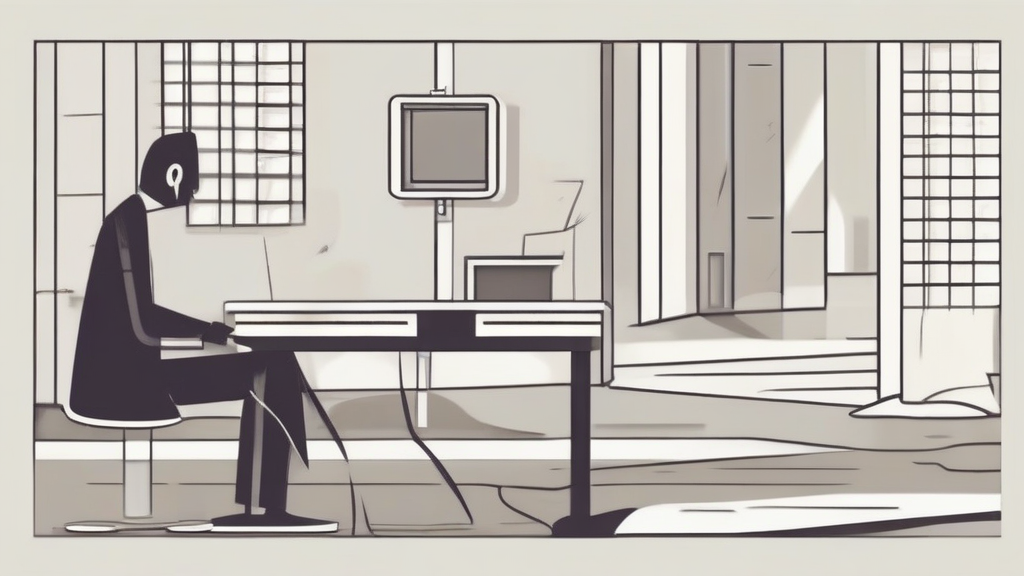
The Origin Story: Meet ELIZA: The 1960s Computer Program That Became the World's First Chatbot
I remember the first time I sat down to "talk" to a piece of software. It felt like magic, but as I learned more about its creator, the magic soured into something much heavier. To understand where we are going with artificial intelligence, we have to look back at the beginning. We need to meet ELIZA: the 1960s computer program that became the world's first chatbot.
Back in 1966, Joseph Weizenbaum, a professor at MIT, released a program that mimicked a Rogerian psychotherapist. It was simple—frighteningly so. It used pattern matching to turn a user's statements into questions. Yet, people fell for it. They poured their hearts out to a collection of scripts. They felt understood by a machine that didn't know the first thing about being human.
This wasn't just a clever parlor trick; it was a societal earthquake. Weizenbaum watched as his secretaries, his colleagues, and even his own family began treating the machine as a confidant. He realized that the illusion of intelligence was far more dangerous than the lack of it.
Why Weizenbaum Turned Against His Creation
You might think the creator of such a breakthrough would be proud. Instead, Weizenbaum became the technology’s harshest critic. He spent the rest of his life warning us that just because a machine can simulate human interaction, it doesn't mean it should.
He called his experience with the program a "shocking" revelation. He saw how easily people anthropomorphized the software. Even when he explained how it worked—that it was just a series of string manipulations—people refused to believe it was hollow. They insisted the machine had a soul.
The Psychology of the Illusion
The human brain is wired to find patterns, especially in communication. When we hear a response that mirrors our own emotional state, we project meaning onto it. This is a core concept in psychology that Weizenbaum understood all too well. He realized that the "ELIZA effect" was a trap.
It’s easy to feel heard by a machine that only echoes your words back to you in a slightly different form. But that isn't empathy. That is data processing. When we confuse the two, we lose our grip on what actually constitutes a human relationship.
Think about your own interactions today. How many times have you asked a virtual assistant to "please" do something? We are hardwired to treat anything that speaks like a person as a person. Weizenbaum saw this coming sixty years ago, and he hated it.
The Ethical Divide in Modern Tech
We are currently living in the world Weizenbaum feared. We have AI models that can write poetry, debug code, and offer advice. But the ethical questions remain the same as they were in 1966. Is it moral to design systems that intentionally deceive users into believing they are sentient?
Many business owners today view chatbots as the ultimate customer service tool. They save money and provide 24/7 support. Yet, there is a hidden cost. When you replace a human representative with a machine that mimics human behavior, you are fundamentally altering the nature of trust.
The Danger of Deceptive Design
When you build a system to act like a person, you are performing a sleight of hand. If a user thinks they are talking to a human, they will disclose information they would never share with a cold, hard database. This is a massive privacy risk.
Weizenbaum argued that there are certain tasks that should never be delegated to computers. He believed that decision-making involving human values, compassion, and moral judgment requires a human heart. When we outsource those things to an algorithm, we aren't just being efficient; we are being irresponsible.
Consider these points when evaluating the ethics of the tools you use:
- Does the user know they are talking to a machine, or is the software designed to hide its identity?
- Is the goal of the interaction to provide information or to manipulate the user's emotional state?
- What happens to the data shared in moments of perceived intimacy?
The Legacy of ELIZA in Today's AI Landscape
The history of artificial intelligence is littered with milestones, but few are as significant as this one. ELIZA was the first time we saw that humanity could be hacked by a script. Weizenbaum’s regret wasn't that the code was bad; it was that the code was too good at exploiting our fundamental need for connection.
As business owners and tech consumers, we have a choice. We can lean into the deception, using bots to trick customers into feeling "connected" to a brand. Or, we can use technology transparently.
We can build tools that assist, organize, and solve, without pretending to be a friend. Transparency is the only antidote to the regret that plagued Weizenbaum in his later years. When we are honest about what our machines are—and, more importantly, what they are not—we protect the dignity of our users.
Moving Forward with Clear Eyes
I often wonder what Weizenbaum would think of the current state of LLMs. He would likely be horrified by how quickly we’ve embraced the illusion. He saw the potential for technology to dehumanize us, and he warned us that the more we rely on simulation, the less we value the real thing.
We need to stop chasing the "human-like" quality in machines. Instead, we should chase utility, accuracy, and honesty. If you are building a business, don't try to fool your customers. Let your AI be a tool, not a companion. Let your brand be the human element that actually cares.
The story of the first chatbot isn't about how smart we were to build it. It’s about how vulnerable we are when we encounter it. Keep that in mind the next time you chat with a bot. Remember that behind the screen, there is no soul—only code. It’s up to us to keep the human element alive in our work and our lives.
What are your thoughts on the ethics of AI? Are you prioritizing human connection in your business, or are you getting swept up in the efficiency of the simulation? Take a moment to audit your own systems. Ensure that you are using technology to empower people, not to replace the very interactions that make us human. If you want to build a sustainable future, prioritize honesty over automation every single time.
Thank you for reading my article carefully, thoroughly, and wisely. I hope you enjoyed it and that you are under the protection of Almighty God. Please leave a comment below.
Post a Comment for "The Ethical Controversy of Early AI: Weizenbaum's Regret Explained"