Why Modern AI Researchers Study 19th-Century Logic Machines
Welcome to my blog theaihistory.blogspot.com, a comprehensive journey chronicling the evolution of Artificial Intelligence, where we will delve into the definitive timeline of AI that has reshaped our technological landscape. History is not just about the distant past; it is the foundation of our future. Here, we will explore the fascinating milestones of machine intelligence, tracing its roots back to the theoretical brilliance of early algorithms and Alan Turing's groundbreaking concepts that first challenged humanity to ask whether machines could think. As we trace decades of historical breakthroughs, computing's dark ages, and glorious renaissance, we will uncover how those early mathematical dreams paved the way for today's complex neural networks. Join us as we delve into this rich historical tapestry, culminating in the transformative modern era of Generative AI, to truly understand how this revolutionary technology has evolved from mere ideas to systems redefining the world we live in. Happy reading..
The Hidden Ancestry of Modern Algorithms
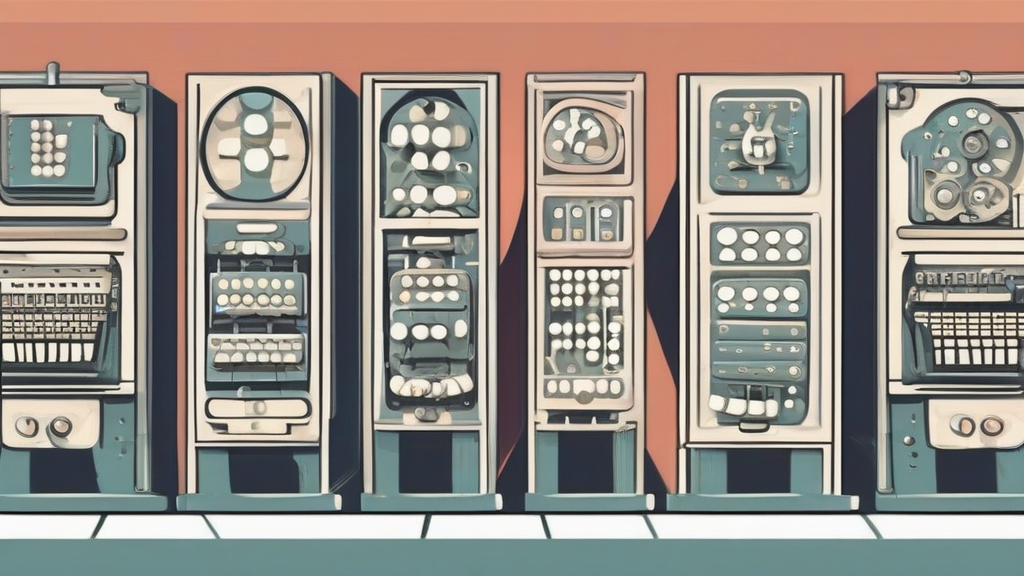
I recently spent an afternoon staring at diagrams of brass gears and punch cards from the 1800s. It felt surreal. While my colleagues are busy tweaking neural networks, I found myself obsessing over Victorian-era hardware. Why? Because the seeds of our current silicon-based intelligence were sown long before electricity powered our lives.
We often treat artificial intelligence as a phenomenon born in the mid-20th century. We point to Turing, McCarthy, and the Dartmouth Workshop. Yet, the conceptual framework for machine intelligence was firmly established Before Computers: Ada Lovelace and the 19th-Century Vision of AI. Understanding these early logic machines isn't just an exercise in nostalgia; it is a way to grasp the fundamental limits and possibilities of what we build today.
The Victorian era was obsessed with order, categorization, and the automation of thought. Inventors weren't just building toys; they were attempting to externalize human logic. By looking at these early attempts, we see that our modern obsession with large language models is actually a continuation of a much older human desire: to build a mirror for our own minds.
Ada Lovelace and the Philosophical Leap
If you look at the history of computing, one name stands as the bridge between pure mathematics and modern programming. Ada Lovelace didn't just see a calculator in Charles Babbage’s Analytical Engine. She saw a machine that could manipulate symbols according to rules, effectively creating the first general-purpose computing concept.
Lovelace understood something that many engineers today forget. She realized that if a machine could manipulate numbers representing non-numerical entities—like music or logic—it could perform tasks that were previously thought to be the sole domain of the human brain. This was the birth of the idea that intelligence could be abstracted from biology.
The Victorian Roots of Machine Intelligence
When we talk about Before Computers: Ada Lovelace and the 19th-Century Vision of AI, we have to talk about the limitations of her time. Lovelace was constrained by the physical reality of steam and gears. However, her vision was unconstrained. She hypothesized that a machine could compose music or weave algebraic patterns if those patterns could be expressed in the language of the machine.
Modern researchers are revisiting her notes because they highlight the difference between "calculation" and "reasoning." Her work serves as a warning and a guide. Even as we build systems that mimic human speech, we are still essentially weaving algebraic patterns. The medium has changed from brass gears to GPU clusters, but the underlying logic remains eerily similar.
Why Logic Machines Still Matter
Why would a data scientist care about a 19th-century logic machine? It comes down to the architecture of logic. Early machines, like those proposed by William Stanley Jevons, were designed to solve syllogisms. They were physical embodiments of boolean logic. They forced the user to break down complex arguments into binary, verifiable steps.
In an age of black-box neural networks, this transparency is refreshing. We are currently grappling with the "explainability" of AI. We don't always know why a model makes a certain decision. Looking back at these Victorian machines reminds us that at the lowest level, intelligence must be structured. It must be verifiable.
- Deterministic Paths: 19th-century logic machines relied on clear, repeatable paths.
- Symbolic Reasoning: They treated concepts as discrete symbols rather than fuzzy probabilities.
- Hardware Constraints: They forced inventors to be efficient, as every gear had to serve a purpose.
These principles are making a comeback in what we call "Neuro-symbolic AI." This field aims to combine the raw power of deep learning with the structured, rule-based logic that those old machines mastered. We are essentially trying to give our modern models a "Victorian brain" to act as a governor for their chaotic, probabilistic outputs.
The Human Desire to Automate Thought
There is something deeply human about the urge to automate thought. We fear the complexity of our own minds, so we try to build machines that can simplify, categorize, and predict. This isn't just about efficiency. It is about control. When we look at the Difference engine or other early calculating devices, we see a society trying to eliminate human error from the act of thinking.
Does this sound familiar? Modern business owners are doing the same thing. They want AI to handle customer service, automate accounting, and streamline decision-making. We are still the same people we were in the 1800s. We still want to offload the drudgery of cognitive labor to a machine so we can focus on "higher" tasks.
However, the danger remains the same as well. When we rely on a machine to do our thinking, we risk forgetting how to think for ourselves. The Victorian inventors were aware of this. They worried that if the machine could solve the syllogism, would the student ever learn to argue? That is the exact question we are asking about AI-generated essays and code today.
Lessons for the Future of AI
If we take anything away from the study of 19th-century logic, it should be a sense of humility. We often think we are at the pinnacle of technological evolution. Yet, we are still wrestling with the same philosophical questions that Lovelace and her contemporaries faced. Can a machine truly "know" something? Or is it just moving symbols around?
The answer, according to the history of these machines, is that the distinction might not matter as much as we think. If the machine's output is indistinguishable from a human's, we treat it as intelligent. But as professionals, we need to be more critical. We need to understand the gears—or the weights and biases—that drive the machine.
Here are a few takeaways for anyone working with AI today:
- Respect the logic: Don't just trust the output; try to understand the rules the model is following.
- Beware of the "Black Box": If you can't explain why a system works, you don't really own the process.
- Focus on the goal: Victorian inventors were obsessed with solving specific problems, not just creating "general intelligence."
Reflecting on the Path Forward
Looking back at the history of computing is a sobering experience. It reminds us that technology is cyclical. We go through phases of pure logic and phases of pure probability. Right now, we are in a phase of massive, probabilistic growth, but the need for structure is already pulling us back toward the logic-based roots of the 19th century.
If you are an online business owner or a tech enthusiast, don't ignore the past. The next big breakthrough in AI probably won't come from just adding more data. It will come from integrating the elegant, structured thinking of those 19th-century pioneers with the immense computational power we have today.
The vision of AI isn't a new invention. It’s an old dream, refined by time and silicon. As we continue to push the boundaries of what these systems can do, let’s make sure we keep one eye on the history books. We might find the answers we need in the brass gears of the past.
Are you applying these historical lessons to your own AI strategy, or are you just following the hype? Start by questioning the underlying logic of your tools today. You might be surprised at how much 19th-century wisdom is hidden in your modern software stack.
Thank you for reading my article carefully, thoroughly, and wisely. I hope you enjoyed it and that you are under the protection of Almighty God. Please leave a comment below.
Post a Comment for "Why Modern AI Researchers Study 19th-Century Logic Machines"