Kasparov’s 1996 vs 1997 Strategy: What Changed in One Year?
Welcome to my blog theaihistory.blogspot.com, a comprehensive journey chronicling the evolution of Artificial Intelligence, where we will delve into the definitive timeline of AI that has reshaped our technological landscape. History is not just about the distant past; it is the foundation of our future. Here, we will explore the fascinating milestones of machine intelligence, tracing its roots back to the theoretical brilliance of early algorithms and Alan Turing's groundbreaking concepts that first challenged humanity to ask whether machines could think. As we trace decades of historical breakthroughs, computing's dark ages, and glorious renaissance, we will uncover how those early mathematical dreams paved the way for today's complex neural networks. Join us as we delve into this rich historical tapestry, culminating in the transformative modern era of Generative AI, to truly understand how this revolutionary technology has evolved from mere ideas to systems redefining the world we live in. Happy reading..
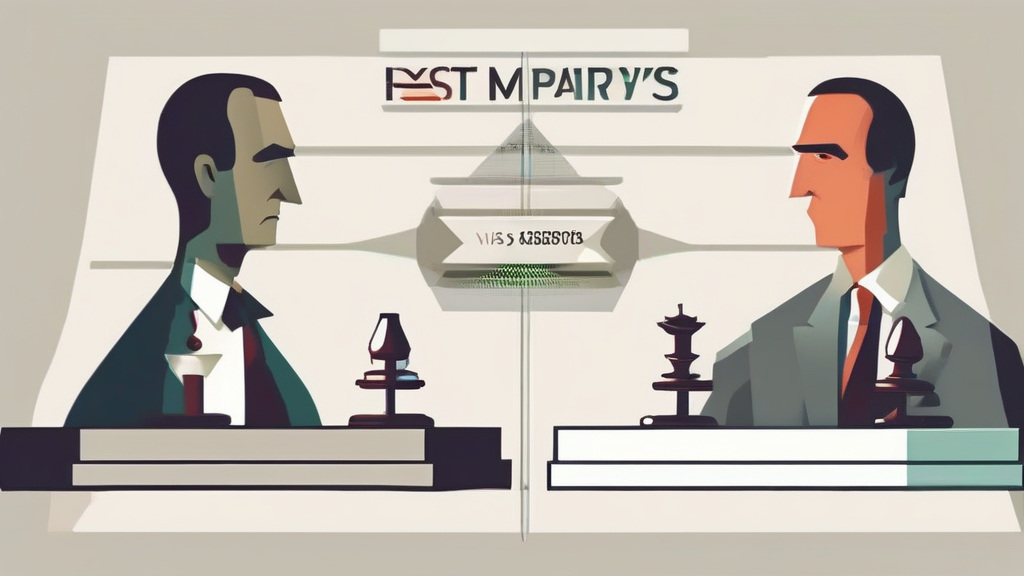
Analyzing the Kasparov strategy 1996 vs 1997 reveals a masterclass in adaptation, hubris, and the relentless march of computational brute force. Looking back, we aren't just talking about a board game; we are witnessing the moment human intuition collided with a wall of silicon.
Key Insights
- In 1996, Kasparov exploited the machine’s lack of long-term planning, winning 4-2.
- The 1997 rematch saw Deep Blue undergo significant hardware upgrades, increasing its search depth.
- Kasparov’s psychological approach shifted from confidence to confusion, leading to a historic loss.
- The 1997 defeat forced a realization: raw processing power could override strategic brilliance.
During the 1996 match in Philadelphia, Garry Kasparov treated the machine like a novice student. He used psychological warfare, choosing offbeat openings to avoid the computer's massive opening database. He played to the machine's inability to see the "big picture" of a long-term maneuver.
The machine was a glass cannon. It could calculate variations rapidly, but it lacked the cohesive, human-like strategy required to navigate complex, closed positions. Kasparov dismantled it by slowing the game down, forcing the computer to wander aimlessly while he tightened the noose.
The Evolution of the Kasparov Strategy 1996 vs 1997
By 1997, the landscape had shifted violently. IBM engineers had not just tweaked the code; they had fundamentally altered the beast. They upgraded the processors and, crucially, gave the team of experts more control to tune the evaluation function between games.
Kasparov entered the 1997 New York rematch expecting a similar structural weakness. He was wrong. The machine had been taught how to handle long-term positions that previously baffled it. It was like fighting a boxer who had spent the last year doing nothing but studying your specific counter-punches.
| Factor | 1996 Philadelphia Match | 1997 New York Match |
|---|---|---|
| Machine Capability | Limited strategic depth | Improved search and evaluation |
| Kasparov’s Mindset | Aggressive, confident | Anxious, defensive |
| Outcome | Kasparov wins 4-2 | Deep Blue wins 3.5-2.5 |
Why the 1997 Performance Shifted the Paradigm
The turning point arrived in the sixth game. Kasparov attempted a defense he thought was solid, but the machine played a sacrifice that shattered his position. He resigned in a state of visible shock. It wasn't just a loss; it was a total breakdown of his defensive framework.
Think of it like a seasoned chess grandmaster playing against a wall of mirrors. Every time Kasparov tried to project a strategy, the machine reflected a version of it back that was slightly more optimized. He felt like he was playing against a team of humans, not a single processor, which likely contributed to his accusations of cheating.
The artificial intelligence of the era was not "learning" in the modern neural-network sense. It was, however, becoming a force of nature. This moment remains a historical milestone because it proved that heuristics, when paired with massive hardware speed, could rival the greatest human minds on the planet.
FAQ
Which AI system defeated Garry Kasparov in chess in 1997?
The system was IBM's Deep Blue, a massively parallel, RS/6000 SP-based supercomputer. It was specifically designed to play chess at the world-championship level.
What did IBM's Deep Blue defeating Garry Kasparov in 1997 signify?
It marked the first time a reigning world champion lost a match to a computer under tournament conditions. It effectively signaled the end of human dominance in chess and the beginning of the era of super-powered computational analysis.
Why did Kasparov struggle so much in the 1997 rematch?
Kasparov struggled because he could not adapt to the machine's improved ability to handle long-term positional play. His reliance on psychological tricks failed against an opponent that was technically superior to its predecessor and had no ego to rattle.
The transition between these two matches serves as a stark reminder that even the most elite strategies have an expiration date. When your opposition evolves, you must do more than just refine your tactics. You must be willing to abandon the playbook entirely. Don't wait until the final move to realize you're playing a different game than your opponent.
Thank you for reading my article carefully, thoroughly, and wisely. I hope you enjoyed it and that you are under the protection of Almighty God. Please leave a comment below.
Post a Comment for "Kasparov’s 1996 vs 1997 Strategy: What Changed in One Year?"