The Legacy of Feng-hsiung Hsu: Meet the Architect of Deep Blue
Welcome to my blog theaihistory.blogspot.com, a comprehensive journey chronicling the evolution of Artificial Intelligence, where we will delve into the definitive timeline of AI that has reshaped our technological landscape. History is not just about the distant past; it is the foundation of our future. Here, we will explore the fascinating milestones of machine intelligence, tracing its roots back to the theoretical brilliance of early algorithms and Alan Turing's groundbreaking concepts that first challenged humanity to ask whether machines could think. As we trace decades of historical breakthroughs, computing's dark ages, and glorious renaissance, we will uncover how those early mathematical dreams paved the way for today's complex neural networks. Join us as we delve into this rich historical tapestry, culminating in the transformative modern era of Generative AI, to truly understand how this revolutionary technology has evolved from mere ideas to systems redefining the world we live in. Happy reading..
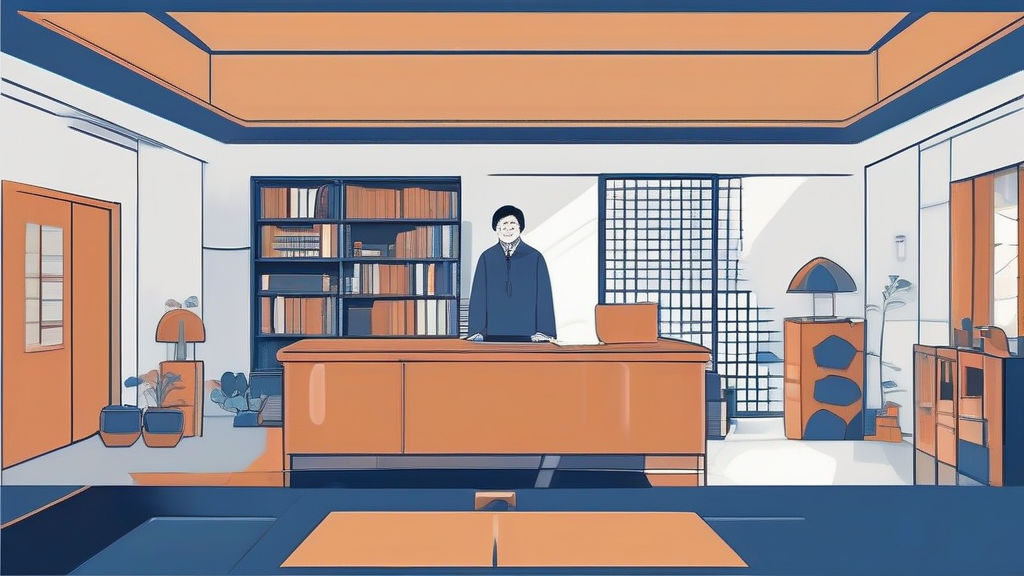
If you want to understand how artificial intelligence moved from science fiction to reality, you have to meet Feng-hsiung Hsu, the Deep Blue creator who forced the world to reconsider human intelligence. Before ChatGPT or neural networks dominated our headlines, there was a quiet engineer at IBM pushing the boundaries of raw computational power.
Key Insights
- Hsu’s work on VLSI (Very Large Scale Integration) chips was the true catalyst for Deep Blue’s success.
- The project evolved through three distinct stages: ChipTest, Deep Thought, and finally, Deep Blue.
- Defeating Garry Kasparov in 1997 served as the "moon landing" moment for the field of computer chess.
- Hsu transitioned from academic research to practical industry application at IBM.
Most people think of Deep Blue as just a big server sitting in a room. It was actually a custom-built machine, essentially a high-performance race car engine placed inside a sedan chassis. Hsu’s genius wasn't just in the code; it was in the hardware design.
He treated chess like a physics problem. While others were trying to teach machines to "think" like humans, Hsu decided to make the machine "calculate" like a god. By focusing on massive parallel processing, he created a system capable of evaluating hundreds of millions of positions per second.
The Evolution of the Feng-hsiung Hsu Deep Blue Legacy
The journey didn't start at IBM. It began in the graduate labs of Carnegie Mellon University. Hsu was obsessed with the idea that specific computer chess architectures could outperform general-purpose supercomputers.
Think of it like building a dedicated tool versus using a Swiss Army knife. A Swiss Army knife is versatile, but a dedicated laser cutter does one thing with absolute perfection. Hsu built the laser cutter.
| Project | Focus | Key Contribution |
|---|---|---|
| ChipTest | Hardware Search | Proof of concept for custom chess chips. |
| Deep Thought | Search Depth | First machine to reach Grandmaster-level rating. |
| Deep Blue | Massive Parallelism | Defeated the reigning world champion, Garry Kasparov. |
The 1997 match against Garry Kasparov remains the most famous moment in the history of machine learning. It wasn't just a game. It was a psychological reckoning for humanity.
Hsu stood in the shadows while the machine took the spotlight. He didn't care about the fame. He cared about the efficiency of the architecture. That shift in mindset—prioritizing specialized hardware—is exactly what we see today in the development of AI-specific GPUs.
Who was the primary architect of Deep Blue?
Feng-hsiung Hsu was the lead architect. His team at IBM Research provided the resources, but his design philosophy guided the creation of the chess-specific chips that made the victory possible. He proved that brute-force search, when optimized via silicon, could outmatch the most brilliant biological brain in a closed-system game.
How did the Deep Blue project change AI?
It demonstrated the power of dedicated hardware. Before Deep Blue, many researchers were convinced that symbolic AI or human-like heuristic approaches were the future. Hsu showed that scaling computational resources—doing the work faster and more broadly—could simulate "intelligence" so effectively that it became indistinguishable from high-level strategic planning.
What is Feng-hsiung Hsu doing today?
After leaving IBM, Hsu continued his work in computing and industry. He transitioned into roles that utilized his expertise in VLSI design and high-performance computing. He remains a pivotal figure in the history of science, often consulted for his deep insights into how hardware limitations shape the progress of software intelligence.
Looking back at the trajectory of Deep Blue, it is clear that we owe our current AI landscape to the groundwork laid by engineers who dared to think differently. If you want to build something that lasts, stop trying to copy nature. Build a better machine.
Thank you for reading my article carefully, thoroughly, and wisely. I hope you enjoyed it and that you are under the protection of Almighty God. Please leave a comment below.
Post a Comment for "The Legacy of Feng-hsiung Hsu: Meet the Architect of Deep Blue"